Game-Changing Decision – I’m Launching a Business & Executive Coaching Practice

shutterstock_228818551

Friends and colleagues, I have made a game-changing decision. Some of you have already heard, as emails and successive social media posts create a series of “mini-launches” rather than one definitive LAUNCH.

I am hanging up my shingle, stepping aside from the practice of law, and launching a business and executive coaching practice geared toward attorneys, executives and entrepreneurs. More details to come soon, as I work on reconstructing the SEGAL LAW BLOG into my new coaching blog.

In the meantime, here’s my new website: www.segalcoaching.com.

Thanks again for all of your support!

The best is yet to come.

-Anne Marie

Never, Ever Unstaple a Will (And Did I Mention Never, Ever?)

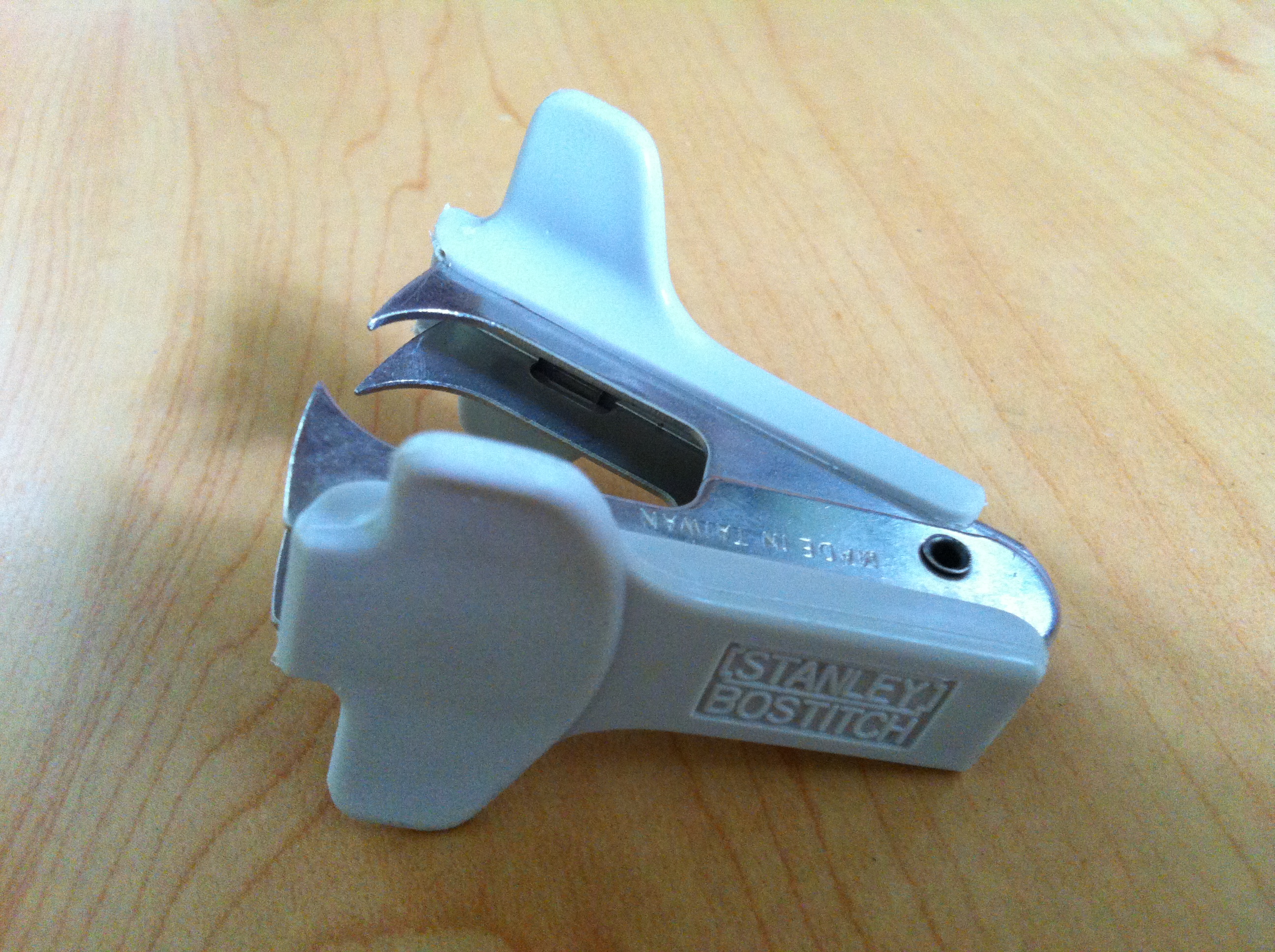
Who would have thought that a small and simple object that (can draw blood if squeezed into a finger but otherwise) appears relatively harmless could blow your entire estate plan?

The common staple remover. An enemy of well-drafted last will and testaments and well-made estate plans nationwide.

photo-19

[Note: This post was written while I was a practicing attorney running a diverse solo law practice, and it is one of a small number of “legacy posts” that I have retained on the site. When published, this was one of my most popular posts. Since April 2015, I have been working as an executive coach and writer, and I am not currently available for legal engagements.]

Here’s what I tell my clients:

Never, ever unstaple a will. Never, ever, ever. And did I mention never, ever? Don’t do it!

To drive home the point with a memorable comparison, I even have joked with some clients on occasion that unstapling a will is like having an affair. (I only say this when I am pretty well assured the joke will be properly received.) You can try to put it – i.e., the marriage or the will – back together again, but it will never go back exactly the same as it was before. There are always some holes that cannot be filled and some room for distrust that it is difficult to overcome.

There are always some holes that cannot be filled and
some room for distrust that it is difficult to overcome.

Unstapling a will can call the entire document into question. Was a page added or removed? Is it a complete and properly ordered copy? Even if the pages are numbered and initialed, how can we (sometimes many years later) be sure that no one did an artful yet fraudulent switch of parts of the document he/she did not like?

It is such a serious issue that, if a will is to be proven in probate court as the correct, complete and valid original last will and testament, there is a process of submitting an affidavit by the person who unstapled the will, discussing the reason for the unstapling, when and how it happened, and by whom. The court is understandably concerned that there was no foul play involved, and wills with multiple staple holes are regarded with suspicion.

So what should you do instead, if you need a copy of your will?

If you need a copy of your will, you should make a copy of a copy, not of the original. Or you can make a copy of the original without unstapling it, making sure that you do not damage any of the pages in the process. It’s not a good idea to have too many copies of your will floating around in any case, since you may wish to change it later and do not want someone with an older copy trying to challenge the later will. If you have any doubts, contact your local estate planning attorney before taking action that can have serious legal consequences to one of the most important documents in your legal life.

So let’s not forget. I repeat:  Never, ever unstaple your will! Never, ever!

None of the information posted on this site constitutes legal advice or forms an attorney-client relationship.

What is the Supplemental Register for U.S. Federal Trademark and Service Mark Registration?

The Federal Trademark Register of the U.S. Patent and Trademark Office (USPTO) has two sections: the Principal Register and the Supplemental Register. The vast majority of the time, a trademark applicant applies for registration the Principal Register. The Supplemental Register is reserved for marks that are currently “nondistinctive” in the eyes of the USPTO (or its agents) and are capable of acquiring distinctiveness or “secondary meaning”.

[Note: This post was written while I was a practicing attorney running a diverse solo law practice, and it is one of a small number of “legacy posts” that I have retained on the site. When published, this was one of my most popular posts. Since April 2015, I have been working as an executive coach and writer, and I am not currently available for legal engagements.]

What’s a “nondistinctive” mark?

Nondistinctive marks include descriptive marks, generic marks, “mere” surnames, geographic terms and nondistinctiveness, nonfunctional trade dress.

A “descriptive” mark is one that merely describes the good or service or, in the language of the Trademark Trials and Appeals Board (TTAB), “conveys an immediate idea of the ingredients, qualities or characteristics of the goods.” Generic marks are the common names for goods and services. Think “desk” for a desk or “chair” for a chair. (See my prior post Not So Easy… for more information about descriptive and generic marks.) Geographical names are ones that are simply using geographic location as a mark. For example, if I decided to call my law practice: Stamford Law Firm. (Trade dress is topic for another post.)

Surnames (last names) may or may not be registrable, depending on factors such as how common the surname is and how it functions. I have friends whose surname is “Watson”, and I recently sent them this TTAB case with facts about using Watson as a trademark (in a particular case, in which the use was denied). Yes, this is the type of humor that lawyers and their unsuspecting friends find amusing! Obviously, there is a famous surname that is very common yet enjoyed a wide berth on the trademark registration front. Hint: it starts with “Mc”.

What is “secondary meaning”?

Secondary meaning is a way of acquiring “distinctiveness” for a mark over time. When a formerly non-distinctive mark becomes known to consumers as a source for particular goods or services due to the mark’s long and extensive use, it may acquire secondary meaning. Unfortunately, there is no hard and fast rule for when the mark actually acquires distinctiveness, but there is a presumption of secondary meaning after five years of substantially continuous and exclusive use of a mark in commerce. (Note: “commerce” is a term of art meaning interstate or international commerce, i.e. the commerce over which the federal government has jurisdiction.) There are a number of factors considered, including consumer perception of the mark, and evidence must be submitted to support the claim.

What protections does the Principal Register afford that are not available to a mark on the Supplemental Register?

The main protections available to a mark on the Principal Register that are not available on the Supplemental Register are the presumptions of validity, ownership and exclusive rights to use the mark. A supplemental registration also cannot be used to stop the importation of counterfeit products, and it cannot become incontestable.

What protections does the Supplemental Register afford?

All is not lost if you receive a letter from a USPTO Examining Attorney stating that your mark is not registrable on the Principal Register but may be registered on the Supplemental Register, if you do not or cannot persuade the examiner otherwise.

The Supplemental Register allows for the precious use of the ® symbol, which is for some the Holy Grail of federal trademark registration. It also blocks later-filed applications for confusingly similar marks on related goods and services, which means that no one can get a principal registration or supplemental registration for the same mark in the same class for which you already have a supplemental registration, preserving your place in line. With a supplemental registration, you can bring an infringement claim against third parties, although it is more difficult to prove than if the mark is on the Principal Register. Finally, with registration on the Supplemental Register, you can apply to register in countries that offer reciprocal registration rights with the U.S.

Note that there is also one advantage to supplemental registration over principal registration. If your mark is to be registered the Supplemental Register, there will be no need to publish the mark for third-party opposition, although a third party can later seek to cancel the registration. This may allow you to stay “under the radar screen” if your plan is to build up the name for acquired distinctiveness before would-be competitors catch on to your registration, since the Supplemental Register is checked less often than marks that are published for opposition.

Once on the Supplemental Register, can you amend to the Principal Register?

Unfortunately, you cannot. What you can do, however, is reapply to the Principal Register and show that the mark has, over time, acquired secondary meaning.

None of the information posted on this site constitutes legal advice or forms an attorney-client relationship, and there may be facts not discussed here that are relevant to your situation. 

Safe Deposit Box: Best Place to Keep a Will?

A safe deposit box seems like the perfectly logical place to store a will and other estate planning documents. They are probably the most important documents we will ever have, so shouldn’t they be kept in the safest place?

But is it a safety deposit box the best place? Or should you keep it in a fireproof safe in your home? With your lawyer? The court? Or somewhere else altogether?

[Note: This post was written while I was a practicing attorney running a diverse solo law practice, and it is one of a small number of “legacy posts” that I have retained on the site. When published, this was one of my most popular posts. Since April 2015, I have been working as an executive coach and writer, and I am not currently available for legal engagements.]

Although I mention it again below, this bears stating here at the outset and repeating: Whatever option you choose, make sure your executor knows what you did!

Safe Deposit Box

Although clients often instinctively want to put wills in a safe deposit box, many estate planning lawyers suggest not to keep a will or other important estate planning paperwork there.

photo-14

The problem arises with the fact that many states seal a safe deposit box when informed of the death of the owner, and a court order must be issued to request that the box be opened to search for the will. Although probate courts will generally issue this order “immediately”, in practice there is still a delay until the request is made to the court (or the court acts on its own) and the order is actually granted.

Documents that are generally allowed to be released include the will, any deed to a cemetery or burial plot and any life insurance policy for the named beneficiary. I mention below (by way of example) some basic information about two states, Connecticut and New York, although more complete and updated information may be applicable if and when it is needed by your heirs. Following this information is a discussion of other options for keeping your estate planning documents, such as with an attorney, with the court or in a fireproof safe in your home.

Connecticut

In Connecticut, there is a standard form to request that a safe deposit box be opened after the death of an individual (click here), which should be submitted to the decedent’s corresponding court of probate. The form may be submitted by a next of kin, spouse, or any person showing a sufficient interest in the presence of a will to obtain any will or cemetery deed in the safe deposit box. The court may also issue an order ex parte. In all cases, an officer of the bank must oversee the process and report back to the court.

New York

Surrogate Courts in New York have different forms depending on which court is issuing the order. (New York tends to be more complicated in many legal matters, unfortunately.) Here’s the form for Queens County, for example (click here). To its credit, New York has made it easier with a do-it-yourself program, called the Surrogate’s Court Safe Deposit Box Petition Program, to walk people through how to make the request (attached here). Among other documents, you will need to obtain a copy of the death certificate before making the request.

Bank Procedures

In addition to the above, a bank may have its own procedures, such as requiring Letters of Appointment, Letters Testamentary or Letters of Administration (each being a letter allowing an executor or administrator to act on behalf of the decedent’s estate) before allowing access to the safe deposit box.

As you can see, there administrative hassles involved (those discussed here and others) with storing a will or other estate planning documents in a safe deposit box. That said, for individuals who do not have another safe place to store a will or prefer the safety of a safety deposit box, it may be the best choice.

Lawyer’s Office

Another option is to keep a will with the attorney who drafted it. Again, this may or may not prove as easy as it sounds. For example, we had wills drafted by an attorney shortly after the birth of my first child. After five years the lawyer wrote to us stating that the originals would be sent back to us if we did not inform her that we wanted her to keep them. (But I thought she was going to keep them until we died?)

In addition, offices may move or close, and if you do not keep careful records, it may be difficult for your heirs to locate an original will when the time comes.

The Internet does help in this regard, but it is not foolproof. I represented a client recently who had drafted her first will many years earlier and wanted to update it, changing her executor and adding grandchildren as beneficiaries. We attempted to locate the attorney who had drafted the original will, even contacting a lawyer who had previously shared office space with him and sending out email blasts to estate planning attorneys who might have known him. The man was nowhere to be found. He had either retired or passed away himself. Needless to say, if my client had died without updating her will, her heirs would have only had a copy to submit to the court (that is more open to being contested and requires additional proof to be probated), not the original.

Finally, if the lawyer is not responsive for whatever reason, executors or others seeking to obtain estate planning documents from the attorney may also need to obtain a court order to compel production.

Again, a lawyer’s office may be the best place to store a will, depending on your circumstances. However, you should weigh all factors for and against before making a decision.

The Court

You can file your will with the court in many states, which is also a safe option, but this means that your will becomes an official document, not a private one. If you decide to change the terms of your will, you cannot get it back, so beneficiaries and former beneficiaries can see how their respective inheritances have changed (or been removed) during successive revisions. On the contrary, if a will is a private document, you can destroy the original and all copies, and would-be heirs who have fallen out of favor are none the wiser.

In addition, if you move out of the jurisdiction of the court, out of state or even out of the country, your court-filed will does not come with you. There should only be one original of your will (an inviolate rule, barring very specific cases of different wills covering different assets, such as an international circumstance). That means if you drafted a will while living in Westchester County, New York, and filed it with the Surrogate’s Court in White Plains, your executor and beneficiaries would need to obtain it from that court, even if you or they have since moved to Phoenix, Paris or beyond.

Fireproof Safe in Your Home

It may be, after considering other options, that you decide to keep your last will and testament in a fireproof safe in your home. This is often a good option, especially if you have a safe that cannot be remove from the premises by anyone seeking to tote off valuables. In that case, I would recommend keeping a copy of the will in a safe deposit box (clearly marked COPY, with instructions on where to find the original), in the unfortunate circumstance that the original is lost. Be careful not to create too many copies, since you may later revise important provisions of your will and do not want multiple prior copies floating around that a beneficiary with a reduced share tries to “prove” is your correct and valid last will and testament. This can happen even among otherwise friendly parties, such as children and grandchildren. Do your heirs a favor, and keep everything clean to mitigate potential conflicts.

The Freezer

According to the rumor mill, there may still be a few folks who actually store important documents in the freezer. I have never met anyone who did – maybe it’s a poor man’s safe? – but I certainly don’t suggest having a last will and testament shoved behind the frozen peas. Not only does it sound a bit too Sopranos to me (and James Gandolfini himself left a mess for his heirs), but the bag it’s stored in better be really, super waterproof in the event of a power failure.

Let Them Know What You Did

Regardless of the option you choose for storing your will, make sure that your executor(s) know what you did. The best estate plans only work if the right people know how to follow them and where to locate essential documents when the time comes.

None of the information posted on this site constitutes legal advice or forms an attorney-client relationship, and there may be facts not discussed here that are relevant to your situation. 
Aren’t Band-Aid [Brand Adhesive Bandages] Great? (My First Cut at Trademark Law)

Band-aid pic

I got a cut on my ring finger the other day, trying to lift a heavy box of duraflame® logs into a cart at Fairway. (For the avoidance of doubt and preservation of amusement, that’s Fairway Like No Other Market (a.k.a. Fairway Como Ningún Otro Mercado), not the unrelated Fairway, maker of nonmetal gates, fences, etc.; Fairway Diva Golf.com; Fairway Independent Mortgage Corporation or even Fairway Wine & Spirits, the latter (like Fairway Like No Other Market and Fairway Como Ningún Otro Mercado) a trademark of the Fairway Group Acquisition Company and also a great place to shop.)

[Note: This post was written while I was a practicing attorney running a diverse solo law practice, and it is one of a small number of “legacy posts” that I have retained on the site. When published, this was one of my most popular posts. Since April 2015, I have been working as an executive coach and writer, and I am not currently available for legal engagements.]

Ouch! Cardboard cuts are almost worse than paper cuts. I had to remove my wedding ring and replace it with a Band-Aid brand adhesive bandage. The Band-Aid brand adhesive bandage was borrowed – the kind of “borrowed” that you don’t ever return, that is – and it turned out to be an extra wide Sport Strip® Band-Aid brand adhesive bandage. (It didn’t have the new and improved QuiltVentTM technology like the ones in the picture below, but you get the idea.)

I can’t remember the last time I wore a Sport Strip® Band-Aid brand adhesive bandage, because nowadays with young kids I am accustomed to borrowing theirs (we should really buy stock in Johnson & Johnson, we use so many). The kids’ Band-Aid brand adhesive bandages, of course, have action or animated figures on them, so they’re cute but not as form-fitting. The Sport Strip® Band-Aid brand adhesive bandages were so comfortable, it almost made the whole thing worth it (but not quite)! I have to say, other adhesive bandages just do not compare.

Oh dear reader, lest you think I have turned into an advertisement for Band-Aid Brand Adhesive Bandages – There, for countless moments of caringTM – let me set the record straight! In fact, I took my first trademark (actually service mark) client recently, and I submitted the application to the USPTO today. Along with a very practical need to beef up on the area for reliability and depth – literally hundreds of hours of research and mentoring to get up to speed, which my legal-geek self found quite enjoyable – trademark law comes naturally to me, marrying my knowledge of general legal principles and art history training. I have had so much fun with it that I have been “talking trademarks” and “seeing trademarks” all over the place. I felt inspired to memorialize my giddiness with a blog post. (Also, tomorrow is my birthday, so according to my daughter I should be super, super happy today and only think of good things. She would understand my gush of Band-Aid brand adhesive bandage joy. When you’re six, they fix everything.)

Trademarks, service marks… I can no longer drive down a commercial strip in my town or open my cupboards without counting the marks I see along the way and pondering their origins. There are so many stories to tell through the trademark process. (Just take a gander on Wikipedia at the Johnson & Johnson page to get a glimpse into their little stake in trademark world. Did you know they trademarked the Red Cross symbol? And what happened to the mark after that?)

There’s an old phrase that when you are a hammer, you see nails everywhere. I am seeing trademarks everywhere, as well as lots of potential trademarks, if the owners decide take my or others’ advice that trademarking a name, logo or slogan is one of the most important and cost-effective protections to take for a business, assuming that it is available (by meeting USPTO requirements). So, all ® and TM fun aside, you will definitely hear more about trademarks in future posts on this blog!

*****

P.S. Since posting the above, a seasoned trademark attorney and mentor of mine kindly alluded to the fact that the trademark gods do not look kindly on witticisms tending toward genericide, even if used tongue-in-cheek. Please note for the record that sarcasm is a hallmark of mine (and I don’t mean greeting cards). Neither Band-Aid nor any other name above is used in the generic. I really prefer Band-Aid to any other brand of adhesive bandage, Duraflame to any other firelog and Fairway to any other market. You can quote me on that.

P.P.S. Further revisions above have replaced the ® after references to Band-Aid with the text in red and bracketed text in the headline, upon further suggestion from Boyd Tracy, former counsel to Kimberly-Clark Corporation. More comments about that in a later post.