Across the Private Sector: Strategic Leadership and the Coronavirus Pandemic

As the COVID-19 pandemic has completely altered our work and home life patterns, many of my clients, colleagues and friends have compared this time to having two jobs at once. The term drinking from a firehose, describing the overwhelming flow of urgent matters, has come up more than once in conversation.

While the unprecedented situation has brought heightened pressure and stress, it also provides fertile ground for the disruption of outdated practices and patterns that no longer serve us. Here are some of examples of crisis leadership issues and decisions across a range of companies.

As the COVID-19 pandemic has completely altered our work and home life patterns, many of my clients, colleagues and friends have compared this time to having two jobs at once. In other words, they have their “normal” job – the one they were hired to do – and a new call to lead their teams and/or an entire organization through the coronavirus crisis. Some of them, of course, have a third job as project manager of or substitute teacher for their children’s school schedules or are even serving on the front lines in the medical community or otherwise.

The term drinking from a firehose, describing the overwhelming flow of urgent matters, has come up more than once in conversation.

Covid leadership

While our private sector leaders don’t know what the future will hold – as none of us do – they are nonetheless making strategic decisions to address present needs and prepare for possible future scenarios. Often they need to give answers quickly and with a higher risk tolerance than would have been acceptable in the past, while knowing there could be very real consequences for getting it wrong. At the same time, getting it “right” (either on the spot or by slowing down to observe, process and give thoughtful advice) can make positive contributions to the health, safety, wellbeing, professional development and economic viability of employees within their organizations and create far-reaching ripple effects.

While the unprecedented situation has brought heightened pressure and stress, it also provides fertile ground for the disruption of outdated practices and patterns that no longer serve us. Here are a range of crisis leadership examples emerging in the midst of the coronavirus pandemic:

Team and Organizational Leadership

  1. Creating COVID-19 task forces to streamline and provide consistency in strategy and responses
  2. Helping board members and other senior leaders become more comfortable with virtual platforms for meetings and presentations
  3. Encouraging input across all levels of the organization, especially from those who are closer to the pulse of customer needs
  4. Holding happy hours and other team meetings over videoconference, especially to support those employees who are naturally extroverted and finding it draining to be isolated for an extended period
  5. Hosting enterprise-wide and/or departmental town halls to maintain clear and ongoing communications
  6. Attending to employees’ mental health and personal concerns, such as childcare and family situations (including the possibility that family members are suffering from the virus), while respecting their need for privacy

Business Leadership and Relationship Management

  1. Renegotiating (and seeking out new) contracts and partnerships, such as leases and supply chain agreements
  2. Reinventing how they do business, especially if they are in one of the harder-hit industries
  3. Actively working with regulators to create flexibility to respond to new situations while honoring policy goals
  4. Closely monitoring corporate liquidity while trying to keep their workforce in place
  5. Interpreting ambiguous new laws and executive orders, such as the CARES Act
  6. Continuously updating modeling and/or 100-day plans; resetting or suspending judgment on appropriate goals through the rest of the calendar year
  7. Redeploying underutilized staff to support overtasked areas of the business
  8. Taking business continuity and other lessons from prior crises to apply or adapt to COVID-19 leadership and increase infrastructure resiliency
  9. Adapting leadership responses across the varying needs of local jurisdictions and international businesses and/or business lines
  10. Exploring and creating best practices to allow employees to return to their offices without compromising their safety and providing support for those who can and prefer to continue to work from home
  11. Managing RIFs (reductions in force), hiring freezes and/or prioritization of new hires with limited resources
  12. Arranging donations of extra materials to organizations and individuals

Individual Time/Self Management

  1. Creating personal boundaries and work-home distinctions, even as they may working at off hours and in their living spaces
  2. Branching out into new areas of expertise, while managing the “trial by fire” nature of their expanded responsibilities
  3. Finding ways to stay “fresh” as the crunch marches on

Feel free to add additional examples of crisis leadership you have witnessed in the comments section below. For more COVID-19 career and leadership resources, please click here or visit AnneMarieSegal.com/covid-19.


Anne Marie Segal is an executive coach and writer based in Connecticut. To learn more about her, you can visit her About page or LinkedIn profile.


Coronavirus: In Sickness and In Health

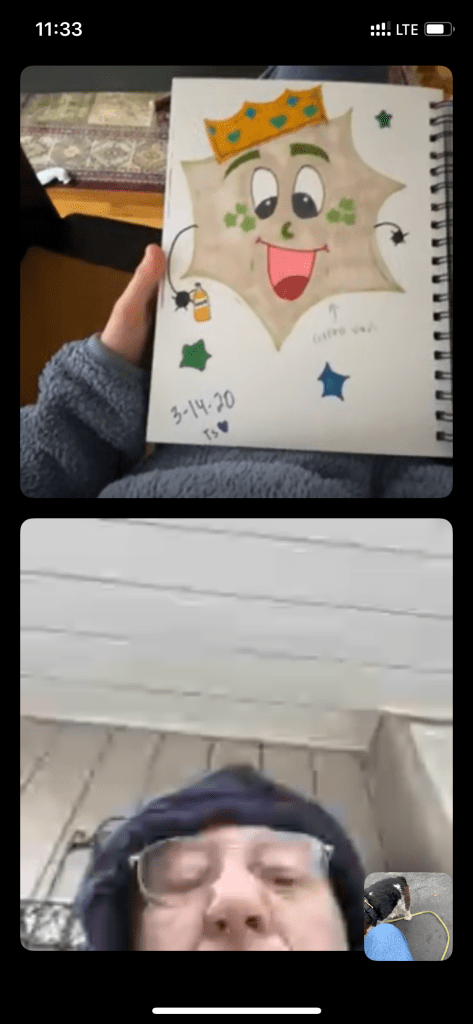
Like many of my friends and colleagues and indeed many of us across the globe, among the changes in my life lately are a house full of people all day every day, including two teenagers working on remote learning through their schools. They have been pretty good about managing their emotions around the need to be stuck at home and have even found some time to join in FaceTime calls with their grandparents. (Yep, that’s our dog Carter in the bottom right hand corner!)

As I’m reading the headlines at least four or five times a day – trying not to look more than that and get sucked into the never-ending void of the COVID-19 news cycle – I have also been fighting off a stomach bug since Monday. Normally I can take that into stride, but I must admit the fact my symptoms were a potential warning sign for coronavirus gave me some pause, even as I have been “sheltering at home” for over almost twenty days.

Since I live in Connecticut, which is one of the hotspots in the U.S., the choices are rather limited: If you feel well, stay home. If you don’t feel well, stay home. Don’t go to the hospital or otherwise put a strain on medical resources unless you absolutely need it, for your own safety and because you just might save a life. So that’s what I did. 

Thankfully, I’m on the mend!

Like many of my friends and colleagues and indeed many of us across the globe, among the changes in my life lately are a house full of people all day every day, including two teenagers working on remote learning through their schools. They have been pretty good about managing their emotions around the need to be stuck at home and have even found some time to join in FaceTime calls with their grandparents. (Yep, that’s our dog Carter in the bottom right hand corner!)

IMG_5385

Drawing has emerged as a new interest in my daughter’s life, including graphic representations like the one above she made of a “happy coronavirus.” (Irony notwithstanding, the virus is alive, well and probably pretty pleased with itself, if we can personify it for just a moment.) She has also turned our living room into an art studio as of late, and we are waiting for a pack of easels from Amazon to arrive so we can host a homebound family painting night this weekend, which is cheaper than a night at a paint bar and hopefully just as fun if not more. In the meantime, she has tuned into a few Bob Ross videos to expand her range in acrylics.

IMG_3274

It’s an interesting segue into a topic I discussed on a webinar this week (see directly below) about finding your interests and strengths as part of building out your career, especially in the context of a job search or career change. Many of us are finding that we are rising to the occasion and discovering strengths we did not know we had, as our normal routine is interrupted and we are searching for creative solutions to novel problems that face us in the course of our “new normal.”

For my part, I am finding that certain tasks I found challenging before, particularly because they did not feel rewarding, hold my interest much longer than they had a few short weeks ago. Housework is certainly among these! Holding down the fort takes on a whole new meaning in the midst of a pandemic. Keeping order means our mental health stays intact, which in turn helps all of us able to do our part in flattening the curve.

5th Anniversary

Wednesday, April 1, was the fifth anniversary of Segal Coaching! It’s hard to believe that five years have passed. As excited as I am for this milestone, it pales in comparison to all of the chaos of recent weeks. Like many other special occasions that are being postponed, I guess I’ll be celebrating this anniversary sometime in the summer or fall. 

Cupcakes with sparklers

Anne Marie Segal is an executive coach and writer based in Connecticut. To learn more about her, you can visit her About page or LinkedIn profile.
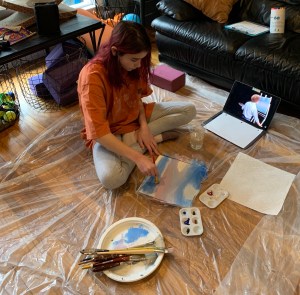
Image credits: Top two photos © 2020 Anne Marie Segal. All rights reserved. Artwork in top photo © 2020 Tamara Segal. All rights reserved. Video courtesy the Alumni Association of the University of Chicago. Birthday image sourced from Adobe Images. Bottom photo © 2020 Francisco Lasta. All rights reserved.