Inspiration and Time Management: Can the Two Ever Be Reconciled?

Coaxing inspiration to fit into the ins and outs of modern life may be one of the hardest things that we need to do as human beings. It is akin to shaping glass – you need just the right amount of heat, skill and supple touch – and you need to risk that your project will be a bust. Yet the more you practice, the better your results will be.

Time and idea


How can you successfully manage your time when the next great idea could strike at any moment?

How do you make time for inspiration in any already busy day?

As a coach, I provide answers. As an individual, I have my own questions. One question that I have been struggling with this past year is how to foster inspiration while maintaining a sense of balance. I must admit that these two goals often work at cross-purposes in my life, as they do for many others who are blessed with the creativity bug.

Often the more I am inspired I am, the harder it is to be at peace. Channeling inspiration is a nagging, messy, guarded and complicated process. It makes me want to wake up at the wee hours of the morning and start going, and it propels me to extend my day much beyond the time my body is telling me that I need rest. It urges me to skip lunch and feed it instead.

Inspiration says, “don’t stop and eat lunch, feed me instead!”

I can set a perfect plan – at 10 am I will be doing X, by 11:30 am I will move to Y. But inspiration is jealous. It does not know how to share. It threatens to abandon me if I leave it on its own for too long, so when I return at 12:30 pm, it may be grumpy like a child.

Of course, I need inspiration as much as I need water, and I am sure you do too. The more inspired I am, the more I find passion and meaning in my life and the more energy I have for the other tasks in my day. On the days that I am most inspired, my output can be 20x the days that I am not.

To that end, I have become a huge fan of energy management rather than time management. If you focus on energy management, you channel your activities with the end game of increasing your overall energy for the day, so you can be at your best in each task. This matches many of us more than straight time management, in which we try to fit inspiration into a set of pre-programmed times.

Yet our days don’t always work that way either. Inspiration on one topic may strike at 1 pm, and a critical meeting on another may start at 1:15. So the question may become how to push and pull inspiration, weaving it into our free hours (however many or few those may be) without dampening those very creative ideas and the flow that can accompany their execution. 

This is hard. In fact, it may be one of the hardest things that we need to do as human beings. Coaxing inspiration to fit into the ins and outs of modern life is akin to shaping glass – you need just the right amount of heat, skill and supple touch – and you need to risk that your project will be a bust. Yet the more you practice, the better your results will be.

I have found something that has worked for me, so I wanted to share it. It’s a cliche, but made new again in this analogous context. Here it is:”If you love something, set it free.”

I love inspiration, so I have set it free. Right now, for example, I am writing this post at 9:50 am. I will stop at 10 am to prepare for my next meeting. If it means that I lose my train of thought, there is always another train. I cannot control inspiration, but it doesn’t control me either. We live in harmony with each other.

Inspiration will not leave you if it knows you are coming back.

If you live in the world of inspiration long enough, it starts to feel like home. It’s like an old friend with whom you can pick up a conversation started 15 minutes or 15 years earlier. Or a child who knows that although you have left the room, you will always return. If you trust inspiration, it will trust you back.

9:58 am. Inspiration, it’s almost time to go. It’s farewell and not goodbye. See you soon!

Anne Marie Segal is a career and leadership coach, author and resume writer for attorneys, executives and entrepreneurs. Her book on job interviews, Master the Interview, is available on Amazon.com

Image above from Adobe Images.


How Can You Be Pro-Active in a Reactive Job?

If you spend all day putting out so-called fires at your job – in a very reactive environment – how can you possibly plan or address your career pro-actively?

Fire alarm push botton

A client recently asked:

If you spend all day putting out so-called fires at your job – in a very reactive environment – how can you possibly plan or address your career pro-actively?

Preliminaries:

First, let’s define some terms:

  1. Pro-active: creating a situation or causing something to happen
  2. Reactive: responding to a situation (rather than creating or controlling it)
  3. Fire alarm: a colloquial way to describe a frantic and urgent situation or deadline in a corporate environment, often one that is a “false alarm” created by lack of planning rather than a true emergency

As Randy Pauch said, in the last few months of his life, “time is the only commodity that matters.” We need to manage our time just as we manage our money, and in fact the time management piece is even more important. In addition, as you may realize already, most leadership roles are only achieved by individuals who have learned to address matters pro-actively, yet most environments today are full of fire alarms that require us to react rather than plan our time.

Answer:

Here are some ways to manage your time, even in a pro-active environment:

  1. Stop the bleeding, then take care of the patient. Sometimes an emergency has pieces that need to be addressed immediately and other parts that can wait. Can you schedule your day so that you can still get the important things done while addressing what is urgent? Are there portions you can delegate?
  2. Block your calendar, and then block it again. In order to plan, you need to block out uninterrupted time on your calendar. If an emergency (real or otherwise) creeps up on you, the first thing to do is to move the blocked time on your calendar a few days out, so it stays scheduled and is not forgotten.
  3. Break things into small steps. While you may not be able to plan the next few months and what you would like to achieve, you can start to plan individual pieces of it. If you only have 10 minutes, you can empower yourself to do one thing that really matters.
  4. “Do the right things, rather than ‘doing things right.'” I owe this quote to Randy Pausch and the lecture I link above. As he said, “You don’t need to clean the underside of the bannister.” In other words, put your efforts where they pack a punch. For more about that generally, see my posts on the 80/20 rule and high profile/high need tasks.
  5. Know and remember the goal(s). Ask why. Start by asking yourself, and then (if appropriate) politely and directly ask the person who created the task. What are the intended benefits of the work you are doing? Don’t just do something because you are told to do it; think about what results you are individually and collectively trying to achieve. This will save you time if you can find more efficient ways to get to a solution – and avoid unnecessary iterations – rather than just following steps assigned (which may not have been well thought out in the first place). It will also keep you focused on the point in #4 above.
  6. Stop wasting time during your day. Be more organized and match your workload to meet your peak energy levels. Also, eliminate distractions. I’ll talk about all of this more in a future post.

Anne Marie Segal is a career and leadership coach, author and resume writer for attorneys, executives and entrepreneurs. Her first book, Master the Interview, is available on Amazon.com

Image above from Adobe Images.


Working On (vs. In) Your Career

Woman working at home

Working On Your Career vs. In Your Career – What is the Difference?

If you have ever spent time in an entrepreneurial role, you have likely heard the phrase “working on your business” (versus “working in your business”). Working on your business means investing time in activities that will build the business over the long term,  such as marketing, streamlining of activities and professional development. While these activities may serve your immediate clients, they also are critical to assure that your business is headed in the direction that you determine will best position you for growth. In fact, a crucial part of working on your business is figuring out where the future growth lies, aside from how to achieve it.

Employees at companies, as well as new graduates, often do not have the lens of working on their careers as well as in them. In fact, a large part of my work with my own clients is helping them understand the importance of also lifting their heads up, rather than always keeping their heads down. To rise to the higher-level (and more interesting) roles, you need to lift your head above the fray of everyday life and activities to see the bigger picture. We know this intuitively, but we are often too busy to stop and do it.

In addition, it is only the fortunate few who are encouraged to think beyond the box. In a minority of workplaces (and sometimes only for a minority of employees in them), leadership is expected and part of one’s contributions is to develop that presence and state of mind, which can only be achieved when there is time and space to work on developing that goal rather than letting the days go by consumed by urgent deadlines and ill-defined projects whose benefits have not been fully vetted.

Instead, we are often taught in school and tacitly (or openly) encouraged in jobs to keep plugging along, rather than being strategic about where to place our efforts. We move from academia where assignments are determined by a professor or instructor to the workplace where tasks are doled out by bosses or leadership teams.

Due to this constant source of new projects from above, it is not hard to understand why many people go through their careers expecting the decisions to be made for them, rather than seeking out leadership and decision-making opportunities themselves. I often call this “gotta make the donuts” after a commercial by Dunkin’ Donuts in which an beleaguered store employee kept running back to the store every few hours so that his customers (you and me) could have fresh donuts to eat. How different are many of us in our jobs, running from task to task, so harried and hurried that we almost forget why we are doing what we are doing?

Beautiful young woman working in her office.

A large part of my work with clients is helping them lift their heads up, rather than always keeping them down.

In yesterday’s post, I shared that there are 10 weeks until year end. I encourage you to spend a meaningful amount of uninterrupted time – and at least one or two hours – this week or next thinking about how you will spend them.

In the rush of holiday parties and vacations, it is tempting to go on autopilot, with the chief goal of just getting there, making it to year end, rather than actually achieving something meaningful in the time until the calendar turns over to the next January 1. You may have a rush of New Year’s resolutions, but don’t let this time be lost time. There’s a lot you can achieve even before January 1. Here are some ideas:

  • Set up 3-4 networking events or activities in the months of November and December
  • Write an article on a current topic in your field
  • Line up a public speaking event or, better yet, give one
  • Finish ONE project that has been nagging you all year
  • Start ONE project that you can (and will) complete by year end
  • Take the first step in a project that can complete by mid-year
  • Attend a conference that is meaningful to your future
  • Learn a new skill that you need now or to grow in the future
  • Update your resume
  • Find a new mentor or sponsor who can help propel your career
  • Strengthen an existing relationship by a few acts of giving and kindness
  • Help mentor a younger person in whom you see great potential

When working on your career, it is not enough to just do something. Choose the best idea based on what will bring the most benefits to your career. If you don’t know what that would be, you have just identified your greatest area of need – figuring out what will benefit you based on where you want to take your career next (and, possibly, determine where exactly that is). Can you do that, or make significant progress toward that goal, by year end? Yes, but only if you work on it!

Anne Marie Segal is a career and leadership coach, author and resume writer for attorneys, executives and entrepreneurs. Her book on job interviews, Master the Interview, is available on Amazon.com. Her website is at www.annemariesegal.com.

Images above from Adobe Images.


Don’t Miss the Obvious Points of Interviewing

In my new book, Master the Interview, I discuss the importance of recognizing the questions “behind the questions.” If you want results in your job interviews, this is a crucial point.

If you can not only answer the question asked but also address the underlying theme of the question, you set yourself up for job interview success.

AdobeStock_65976046 (beyond obvious).jpg
Look for the obvious – and beyond. (Adobe Images)

In my new book, Master the Interview, I discuss the importance of recognizing the questions “behind the questions.” If you want results in your job interviews, this is a crucial point.

As I mentioned in my prior post, there are the questions that your interviewer asks, and there are often other questions that he/she really wants answered:

Interviewers ask other questions – such as “what is your ideal job?” – that approximate what they want to discover about the candidate, knowing that many of these questions are poor proxies for what they really want to know yet hoping that the questions they do ask get them there.

When interviewers ask “how you overcame a setback in your professional career,” for example, they are asking for about problem-solving skills and resilience. 

As you are preparing for an interview, don’t miss the obvious points. At the same time, look behind the obvious. Instead of simply reacting quickly to a question asked – with all of your adrenalin pumping and your mind on high alert – take a mental step back (a quick one, truth be told) and allow the underlying theme of the question to sink in. Then, you will know that your answer is not only authentic, but also relevant to the job.

If you can not only answer the question asked but also address the underlying theme of the question, you set yourself up for job interview success.

Please follow up for more details at my prior post.

Anne Marie Segal is a career and leadership coach, author and resume writer for attorneys, executives and entrepreneurs. Her new book, Master the Interview, is available on Amazon.com. For more information about Anne Marie’s coaching and resume writing work or to request a potential speaking engagement in the New York area, please visit www.segalcoaching.com.


What Your Interviewer Really Wants to Know

mature business man on a desk, isolated on white

Do you know the underlying interview questions?
Image Credit: Adobe Images

A smart interviewer is not chiefly concerned that you “walk him/her through your resume” or the exact answer to “what are your weaknesses?” or other questions that are commonly asked in the interview process. For many jobs, your interviewer really wants to know the following (or some version of it):

  • Can you do the job?
  • Are you a good fit?
  • Will you make my life easier?
  • Will you solve the problems I really need solved?
  • Will you make or save the company “real money?”
  • Can you extrapolate and analogize, or will you waste time and resources (mine and others) because you don’t know how to think for yourself?
  • Will you anticipate issues before they arise and figure out how to fix them?
  • Will you know how to communicate in a way that people understand (especially me) and on a timely basis?
  • Can I put you in front of my SVP, EVP, CEO, Board of Directors and/or clients, if and when the time comes?
  • Can you grow over time if/when our needs progress?
  • Will you have the resilience to charge through the inevitable setbacks that arise in any job and specifically in the environment in which we operate?
  • Are you able to manage stress (your own and others) in a positive way?
  • Will you make me regret hiring you one day?
  • Will you quit in three months?
  • Will you bail when there’s a crucial deadline?
  • Will you understand and care about what we are trying to achieve?
  • Will you get things done?
  • Can I afford you?
  • Why should I (take a risk and) hire you?

 Of course, most of the questions above are not standard interview fare in most (if not all) roles. Imagine an interviewer saying:

“I have just one question:

Will you make my life easier and by how much?
$150,000 a year easier? Sold! When can you start?”

Skilled interviewers have a dilemma, in other words. They know that if they asked the above questions directly, the answer to most of them would be an emphatic yes or no, as applicable. Easy peasy, as the phrase goes. Any job seeker could give the right answers to sail through an interview like that, so there is no point in asking. So interviewers ask other questions – such as “what is your ideal job?” – that approximate what they want to discover about the candidate, knowing that many of these questions are poor proxies for what they really want to know yet hoping that the questions they do ask get them there.

As a job candidate, the above questions (i.e., the ones a skilled interview would ask, if he/she could) are helpful to keep front of mind. Why? Because these underlying concerns, will help you recognize what you must demonstrate and address to be hired.

When interviewers ask “how you overcame a setback in your professional career,” for example, they are asking for about problem-solving skills and resilience. Any details that you give about the situation should demonstrate those two factors. At the same time, you should be careful that your answer does not demonstrate a propensity to blame others or reveal company or individual confidences, both of which are potential red flags that will peak the ears of an interviewer and damage your candidacy.

The last question from the above list is really the deciding one in any job interview: why should I hire you? I tell my interview preparation clients that every answer they give in an interview should answer this underlying question:

Why should I hire you?

If you know and can internalize that “why should I hire you?” is the underlying question behind all other interview questions, you have a huge advantage in the interview process. You won’t be tempted to go off on a tangent or give the “wrong” response, because you will always gear your answer to what the interviewer really wants to know: the benefits you can bring to the target company.

Anne Marie Segal is a career and leadership coach, writer and resume writer for attorneys, executives and entrepreneurs. The above is an excerpt from her new book, Master the Interview, which is forthcoming on Amazon.com in mid-October 2016. For more information about Anne Marie’s coaching and resume writing work, please visit www.segalcoaching.com.

Writing a Book: What It’s Really Like

What started as a kernel of an idea six months ago – and was only 20 pages in late April of this year – will be a 220-page book on Amazon in a matter of days (or even hours).

I have had many friends, clients and other ask what it is really like to write a book. My answer here tends to describe the non-fiction world rather than how it would be to draft a novel or other fictional account.

shutterstock_275161592-book-writing

It is amazing, first of all. Truly breathtaking. If you like to write, it is like eating all the ice cream you ever wanted and never getting full. For anyone who has ever wanted to write a book, I highly recommend it IF –

you are willing to devote countless hours of your life and will feel energized that you did so.

Here’s only a partial shot of the number of drafts that I made over the course of writing Master the Interview. In addition to writing and revisions, there is quote-checking. And, if you are publishing it yourself, you need to leave time for cover design, interior formatting, title selection (and vetting), image selection (and more vetting), back-of-book blurb drafting and more. And did I mention tons of copyediting, unless you have someone you really trust to do it for you? Heck, I even learned how to code very basic HTML today to format the descriptions in my e-Store. [Update: I decided not to use the e-Store, because the minimum price of the book (that Amazon allows) would have been higher than I wanted. It will be priced at $19.99.]

interview-book-files
I saved dozens upon dozens of versions to not lose work and keep my momentum. I edited constantly in the final days before finishing the book, even while I was waiting for the car battery to be jumped by roadside assistance on a trip to Annapolis.

In other words, the writing is only one part of it, and unless you have someone (or want to pay, or get lucky to find a publisher) to do the rest, get ready to put in countless hours.

I self-published this time because I wanted to understand everything that went into the process. I am taking a risk. I know some people won’t buy my book because it doesn’t have a big name attached to it. Many more will, however, make the judgment based on the quality that lies within.

As an entrepreneur, I know that writing is an essential part of thought leadership, and I couldn’t wait to get my ideas out there. In addition, as a career coach, this book is directed to my clients first, as it will facilitate our work together. Those two factors played into my decision, and were it not for that, I may have gone the traditional route from the beginning, even if it meant that publishing would take longer and I would have less control over the outcome of the book.

Will I self-publish again?

Hard to say. This investment has certainly made me more nimble. I see documents in an entirely different light. The first time clearly must be the hardest, and now that I am over that hurdle, the learning curve will be easy. So maybe. It depends on what the traditional publishers offer, I suppose, based on the track record that I am able to develop this time around.

One of the things I learned most was to see the book as a BOOK and not a scattered selection of writings bound together with a cover on them. This was a huge disruption in my prior way of thinking and the only way I successfully brought the project to the finish line.

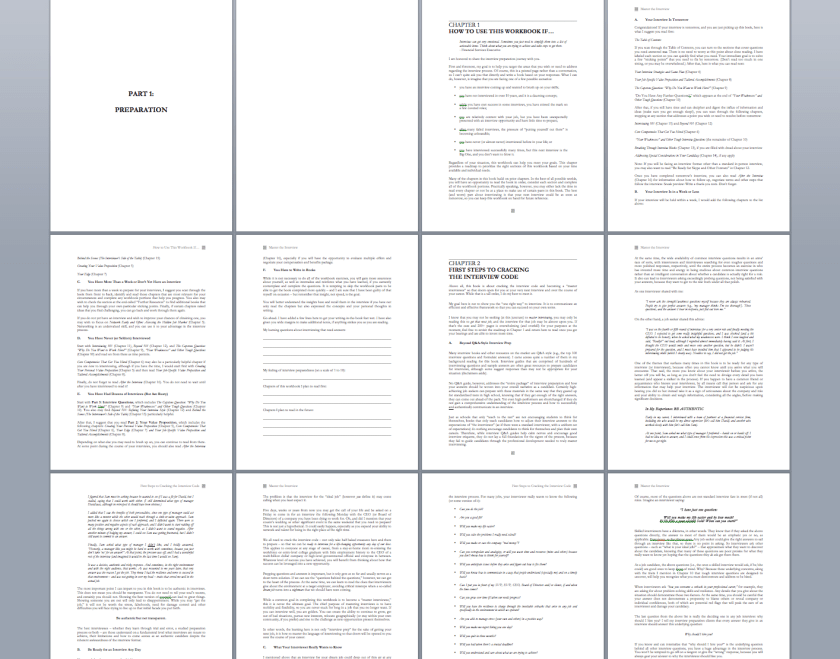
I used the function in Microsoft Word that lets you see multiple pages at once quite often, and I got used to looking at chapters in a new way. It’s essentially the 10,000 foot view, which helps you step back from your material. Not only do you see what you have written with a more detached perspective, but you also gain an entirely new sense of flow and clarity in your writing.

Two more great lessons from this experience were (1) putting words down onto the page, which forced me to have even greater conviction about what I was writing and (2) having the opportunity to receive direct input and suggestions from 50+ expert and industry sources and revise my thoughts and words based on that input. In that sense, the time I have spent on this project has paid me back tenfold already, regardless of how many copies are sold or other good things come out of having done it.

the-birds-eye-view
Here’s the bird’s eye view of editing your own work and seeing your book as a BOOK.

I am sure that I will have more to say in the future about book-writing. For now, here are my initial impressions in the final stages of publishing.

Last but not least, if anyone is considering writing a book themselves and wanted to know how to manage their time to do it, I would suggest creating a schedule with an end date (and finding a way to make it seem “real”). Then back up to the current date and plan out each step that needs to be done. For me, I first started writing a 20-page version, then I got my Table of Contents going, then I wrote more and went back to the Table of Contents. I continued this back-and-forth until the content was over 80% done.

Having a solid Table of Contents was absolutely key to organizing and completing the book.

I must have rewritten and proofed this book at least 20 times, and some parts needed more work than others. I also wrote a few chapters which did not make it into the final book. I estimate that, altogether, I spent 500 hours on this project over a half year of writing, so I spent 20 hours a week on average. It occupied my brain for many more. I expect that a second book will take less time, as I am sure that I did “heavy lifting” many times where none was needed.

How do you fit an extra 20 hours into your week? Early mornings, late nights, writing on weekends and generally prioritizing your writing above anything that is not truly necessary. Some weeks I wrote more, and other weeks I wrote less. The alternative is to spread everything out over a longer period of time – and I had initially budgeted 12 months instead of 6 months for this project – but I can tell you that writing is nothing if not addictive! Once you get into the thick of it, you may not want to put it down.

Thanks, all!

Anne Marie Segal is a career and leadership coach, writer and resume writer for attorneys, executives and entrepreneurs. Her new book, Master the Interview, is forthcoming on Amazon.com. For more information about Anne Marie’s coaching and resume writing work, please visit www.segalcoaching.com.


Get It Together: Organizing Your Job Search Leads

Getting organized in your job search means knowing with whom you are connecting, why and other important data points, so that you can recall them when needed. It is easy to keep 3 job targets in your head. Thirty is not so easy.

Are you struggling to keep up with your job search? You probably know that you need to be organized and keep better track of your leads, but how do you achieve that?

How to organize your job search.

Getting organized in your job search means knowing with whom you are connecting, why and other important data points, so that you can recall them when needed. It is easy to keep 3 job targets in your head. Thirty is not so easy. You may think that you will remember information about the company, your value proposition for the role and other factors, but without this information at your fingertips, you are likely to miss something.

Essentially, you need to know and remember the “who, what, where, when, why and how’s” of your job search. If you keep track of this information, not only will it help you feel as though you are making progress on your job search, but it will allow you to keep up with the important contacts that you have made rather than losing out on opportunities because you failed to follow up.


Document.
Organize your job search. Image from Adobe Images.

While it may seem like extra work to keep track of where you are applying, if it seems like too much effort to keep track of what you are doing, you are probably “doing too much” on the search front (i.e., sending out applications blindly without slowing down to think about whether the jobs to which you are applying are actually good fits for your talents, interests and skills). It is much more productive to slow down and be thoughtful about your applications than try to blanket the market with your resume.

Imagine you receive a call from the HR department of one of your target employers. She says, “Hi, it’s Sherrie at Set Your Sights High,” and you say, “Ummm….”

If you were being completely honest, you may answer:

“Hi Sherrie, can you hold on…? I think I remember you but not your company. Actually, can I call you back when I figure out where you are calling from and why I sent you an application?”

I am sure you’ll agree that’s not your best look. 

I often suggest to my clients that they arrange their job search and interview information in a chart form, such as Microsoft Excel, with the headings of each column as follows. Here are examples of how to arrange it, with the bolded information sorted by columns and the data in rows.

Spreadsheet #1 – Target Roles (examples)

  • Contact at Target – Jorge Rodriguez
  • Target Company Name – Blankman & Co.
  • Nature of Relationship – our kids play soccer together
  • What I Offer this Target – my blend of technology and people skills plus large and small company expertise; they are growing quickly; looking for new COO; want someone decisive; my leadership roles and recruiting are a plus; they like that I have some sales background and can relate to sales team
  • Date/Stage of Last Contact – email on 6/1
  • Next Steps – follow up with phone call if haven’t heard by 6/15
  • Notes – also knows my good friend Ralph and probably Sara, need to bring this up somehow

Spreadsheet #2 – Connectors (examples)

  • Name – Lana Kinderman
  • Company Name – Kinderman & Associates
  • Nature of Relationship – known since graduate school
  • Reason for Connection – will refer me to an UN jobs or others where she has contacts; said I may need to first apply, then she will forward resume to right people
  • Date/Point of Last Contact – lunch on 5/10
  • Next Steps – invite her to September networking event; finalize resume to send her
  • Notes – remind Lana I speak fluent Spanish next time I see her

For the second spreadsheet, “Connectors” are people who are well poised to connect you to possible targets, and the “Reason for Connection” relates to the type of roles with which or individuals with whom they can connect you. For example, the Reason for Connection may be that the individual knows a number of private company CEOs or has other contacts in a certain field and is willing and able to help you connect with them (i.e., has a strong network and wants to support your job search by helping you make connections). Recruiters can also go on the Connectors chart, or a separate chart, since they also have the potential to connect you with a number of roles.

If you are applying to very different sets of roles (e.g., non-profit administration roles and corporate social responsibility (CSR) positions), I would suggest using additional sets of spreadsheets, or different workbooks within Excel if you find that easier, for each leg of your job search, naming them appropriately. The more structured you can make your approach, without complicating it, the better. (And if you find Excel intimidating, tables in Word also work. The point is to use this information to serve your job search, not to be tied to a certain format.)

Some of my clients prefer to include contact information for individuals in this same chart, although I generally keep that separate, so that the spreadsheet is still printable and readable on an 8 ½ x 11 page without heavy formatting.

Click here for a sample spreadsheet.

Alternatively, you can record your job leads and next steps online, rather than through a spreadsheet. This is entirely in the best interest of the job seeker rather than an issue of best practice. I like to see everything on a few pages, neatly organized, and do not want to have to sign in and remember passwords to access my information. Others may appreciate the support of a system. Jibberjobber.com works well for many candidates, for example, and it is free (at the time of this post) for a basic account.

Once you have an interview with a target company, I suggest creating more detailed pages outlining your research and talking points, which I will discuss in more detail in a future post.

Anne Marie Segal is a career and leadership coach, writer and resume writer for attorneys, executives and entrepreneurs. The above is an excerpt from her forthcoming book on job interviews. For more information about Anne Marie’s coaching practice, please visit www.segalcoaching.com.

© 2016 Anne Marie Segal. All rights reserved.