Five Key Questions to Ask When Creating a Personal Advisory Board

shutterstock_128527133

In a prior post, I explored why you should have your own personal advisory board to facilitate your professional growth. Regardless of your seniority, industry or role, here are five key questions to ask yourself as you assemble your board.

1) What do you most need right now? We all have our blind spots and skill gaps that evolve over time. Can you find someone to meet each of your current, most pressing needs? For example, you may have all the emotional intelligence in the world but not know how to run numbers. Or vice versa. If there is a gap between where you are and where you want (or need) to be, the advisors who can fill that gap should be front and center.

2) Can you call them in a crunch? Make sure the people you elect to your inner circle can be reached when you actually need them. This doesn’t mean that they all will pick up the phone at 3 a.m. when you call, but it does mean that they will make time out of their day or week to help you address a concern. It also means that they will make time for you to check in regularly, which you’ll need to keep the relationships fresh and assure your advisors are current on your professional goals and milestones.

3) What role can each advisor play? In addition to the needs and gaps to be met (mentioned above), consider what role each advisor would have in your professional development.

In many organizations, for example, you need a “sponsor” to help promote your career. Without one, you can toil away without growing into greater levels of responsibility and renumeration. A similar rule applies if you are looking to raise capital for a business, and even top level management need support of their board, close colleagues or fellow partners. If possible, choose someone who knows you well enough to credibly sing your praises, has the motivation to help you and has the “political capital” to make a case for you to the right audience.

You will also want a mentor within your firm, as well as someone at your own level in whom you can confide. Save the most thorny issues for advisors that you know you can trust without a doubt (hopefully this would apply to all, but sometimes extra care is required), possibly a mentor or other advisor outside of your firm.

Build your advisory board with individuals that offer different ways of supporting you professionally, and re-evaluate from time to time as your career progresses.

4) How does the team fit together? Imagine all of your advisors were seated at a single table. Do they round each other out? Have you missed anything?

For example, do you have someone who can be your cheerleader when you need to be motivated, someone who can see you clearly enough to give you realistic, targeted advice and another who knows how to get out of sticky situations? Do you have someone who knows your industry as well as you do (or better) and another who can give you an outside perspective? Think top-down to whether your advisory board has the right range, or if you have too many similar talents or a missing voice. You should also strive for some variety in gender, age and affiliation, or at least a group of people who do not all approach problem-solving in the same way that you do.

5) Will you be motivated and committed to help them in return?  Every relationship is a two-way street. If you can’t offer something of real value to your advisor, it will be hard to count on that person’s commitment when you most need it. People are just too busy, with too many demands, to support someone who is a metaphorical dead end.

For a sponsor or mentor, this may mean that you support initiatives the person has spearheaded, mentor a younger colleague in the person’s group, act as a sounding board or simply deliver great work. For a colleague, it may mean that you support his or her professional or personal life in a way that’s helpful and meaningful to that individual. There are creative ways to show your support in return for someone who has helped you, especially if you truly focused on that person’s life and needs.

Make sure to choose advisors with whom you can authentically request and return support. The last thing someone wants is to think your interest is insincere or that it is an effort for you to show up on their behalf. Even a hired advisor (like an accountant or career coach) needs to be a good fit, with mutual trust and rapport, or there will not be enough goodwill generated in the relationship for you to draw out the support you are hoping to achieve.

Whenever possible, surround yourself with people whom you are more than happy to help succeed. If you choose well, the feeling will be mutual.

If you liked this post, you may also like Do You Need a Personal Board of Advisors?

Great Resumes Are Powerful Marketing Documents

Your resume is a marketing document that tells the story of where you have been and where you are going. How you tell that story is largely up to you, but in all cases it is more effective to set your career objectives first and write your resume to meet them.

While there are certain conventions for resumes in many fields, you have a lot of latitude to create a document that will entice employers to call you for an interview and, if you can ace that, make you an offer. As a critical piece of your overall job marketing package, the importance of a powerful resume cannot be overemphasized.

Below is a Slideshare file with my seven strategies to transform your resume into a powerful marketing document. (Click here for the original at slideshare.net.) Feel free to contact me if you are looking for career coaching through any of the stages of exploration, job search and transition, including how to make the most of your new role.

My Biggest Career Mistake: Sailing, Secretaries and Lime Green Pants

Green Pants
I believe in the power of mistakes.

No one likes to make mistakes, of course. But that is where the learning happens. Bigger mistake, greater opportunity to learn.

What may have been my biggest career mistake happened very early on, while I was still finishing my undergraduate degree. I had my very first internship and was ready to conquer the world. Good so far. I also thought I knew exactly how to do it. Ha!

I was a lowly intern, feeling on top of the world that I had gotten “in” at a place that I very much wanted to work. The secretary in the department was very good to me, trying to help me out so I could make my way. But I didn’t take the cue.

Not only did I not yet understand that secretaries rule the roost (if not the world), but I did not appreciate that someone could make choices very different than mine and still have a lot to teach me.

Here’s the thing. This secretary (we’ll call her Nancy) wore lime green capri pants, corduroys and other outfits to work that in my naivety had judged as “not fit for the professional world”. I call myself naive not because I was wrong to recognize that Nancy would not move up the corporate ladder if she didn’t emulate the look of those at the top: dark-colored suits. She wouldn’t. Rather, I assumed that moving up within the organization was and should be Nancy and everyone else’s goal, without realizing that she had her own plan. One that was more carefully formulated than my 19-year-old point of view would allow.

Nancy wanted a place to work during the day (while she pursued her own interests on the side) that was forgiving enough so she could wear want she wanted and be whom she pleased. She was expected to conform to certain norms and left blissfully free to ignore other ones. She made calculated decisions to achieve the results she wanted. She knew exactly how to get where she wanted to go, but it wasn’t anywhere that I could have imagined.

So when Nancy pulled me aside one day to tell me that I should “follow the lead” of the head of the group (we’ll call him Troy), who wanted to talk about basketball and sailing a good part of the time, I ignored her advice. I wanted to ask Troy about things that interested me, and at the time these were not at the top of my list. While others joked and called him Captain Troy, I smiled through gritted teeth and pushed on for the certain set of experiences that I had expected out of the internship.

IMG_2489

After all, we were not on a yacht, we were in an office. I wanted to learn the ways of leadership and success, and they were not going to come from talking about sailing, I thought. At the time, I didn’t have a boat, or any family or friends with a boat. The one time I had taken an extended trip on a boat as a child, I had been seasick most of the week. I was bound to say something ill-informed, so wasn’t it better to steer the conversation back to what was comfortable to me?

I couldn’t look bad if I just avoided topics that were out of my league, right? Anyway, I reasoned, what did Nancy know, with her green pants and all? How could a chat about sailing be useful to me at all, other than to smile and humor my boss? Why would I encourage him to continue that conversation?

Turns out, Nancy knew a lot. In particular, she knew how to keep everyone happy while keeping herself happy. She kept these two goals in perfect balance, giving Troy and the group the support they needed while feeding her own needs. She intuitively understood that showing an interest in sailing was showing an interest in Troy. And that was the important part.

By contrast, I was being immature, overly serious and even selfish – holding on to the world as I knew it – by expecting to direct the line of conversation. And I was missing out on the chance to learn, bond, grow and have fun.

So, my biggest career mistake was actually a set of related mistakes:

Mistake #1: Discounting the message of an unexpected messenger.

Mistake #2: Closing myself off from new experiences.

Mistake #3: Making it all about me.

As I found out later, the green pants were a statement on Nancy’s part, a line in the sand that she was in a bridge job and had no pretense of “moving up” to a management position within that organization. She had her eyes on another prize – her own set of professional goals – but she also made sure to be so good at her job (orienting herself to the situation, as needed) that there was no way she would risk losing it over something as simple as wardrobe choices. In fact, as a highly creative person, she literally wore her authenticity on her sleeve. And she was respected for that by others in the group, including (in the months and years following my internship) by me.

I often think back to Nancy, the unexpected messenger, with whom I have lost touch in the over 20 years since I had that internship. I am indebted to her wisdom. I wonder if she has started her own company, maybe even a fashion line.

Nancy could have changed her style of dress any day. Changing my attitude took a lot longer.

From my biggest mistake, I learned my greatest lesson. It is not all about fitting in, it is also about being a fit.

Do You Need a Personal Board of Advisors?

woman boardroom

The board of directors of a company addresses high-level business objectives, with voting authority and fiduciary obligations. A board of advisors is more informal, providing non-binding strategic advice that can benefit a start-up or smaller company by giving it third-party insights, encouragement, market knowledge, accountability, connections and other resources. Savvy individuals have come to realize that, especially in the new economy, we are each our own business to a greater or lesser degree, whether or not we officially operate as one. Does that mean we each need our own board of advisors?

Many successful professionals intuitively create a loose association of advisors without formalizing the relationships. They have mentors and occasional professional advisors that function in an ad hoc way to support short-term projects or “put out fires” in their business lives. This approach is a great first step, and formalizing this core group frames your trajectory in a foundational way and keeps you on the path to success.

Clearly, you do not need to hold meetings in a fancy boardroom with leather chairs or even get all of your advisors in a room together. While it may help focus the conversation, it can also prove a distraction if it is not a place or assembled group that feels comfortable enough to relax and creatively brainstorm and troubleshoot according to your needs. In fact, your respective advisors do not even need to know each other, since you are not a company for whom they are collectively setting policy but rather an individual seeking guidance, support, grounding and the oh-so-important reality checks. I do suggest, however, that you take more than an occasional, eccentric approach to incorporating one or more boards of advisors into your significant life and professional decisions. Have the infrastructure already in place for the moment of truth when you really, truly need it, so you can call on your advisors without triangulating their whereabouts or struggling to identify whom these angels should be.

I use the word “framing” above very deliberately. With my coaching clients, I often discuss reframing an experience to take ownership in a new way. For example, sales becomes less scary (and ceases to feel inauthentic) if you believe passionately in the service you are providing. A board of advisors becomes less of a foreign concept as an individual if you believe passionately in your own success and wish to give others the opportunity to share in that experience, with a willingness to offer your own help in advance or give back in return. Your passion fuels their willingness to be involved.

In my own life, I have found greater success in those periods that I had a “board”, whether it was a formal group of colleagues meeting on a regular basis or roster of individual mentors and professional advisors that I turned to regularly. Much earlier in my career, I was nervous or fearful that I was taking too much time from people who already had busy careers. At the same time, I failed to invest in myself, financially or otherwise, to get the professional insights that would have made a decisive impact on my advancement.

Why? I thought putting my head down and cranking out whatever was asked of me in the moment showed my “worth” more than cultivating relationships. My accomplishments would speak for themselves, I thought, not realizing the entire world that I was shutting out while I repeatedly closed my door to do some “real work”. I also failed to understand the value I would create by involving others in my experiences and sharing my insight for theirs in return. Value for all, not only for me.

Electing the right mix to your board of advisors and tapping into them is not  an exercise in taking – which is a dead end – but rather in creating value through meaningful personal interactions. In short, you are tapping into the electrifying power of collaboration in a formal way. By electing these mentors, colleagues and advisors to your “team”, you are fostering buy-in for your success. If you are respectful and show gratitude for their investment in your future, your newly-formed board can provide a critical backbone and sounding board to help you frame, keep sight of and reach your goals.

If you liked this post and want to know more, you may also wish to read Five Key Questions to Ask When Creating a Personal Advisory Board.

Game-Changing Decision – I’m Launching a Business & Executive Coaching Practice

shutterstock_228818551

Friends and colleagues, I have made a game-changing decision. Some of you have already heard, as emails and successive social media posts create a series of “mini-launches” rather than one definitive LAUNCH.

I am hanging up my shingle, stepping aside from the practice of law, and launching a business and executive coaching practice geared toward attorneys, executives and entrepreneurs. More details to come soon, as I work on reconstructing the SEGAL LAW BLOG into my new coaching blog.

In the meantime, here’s my new website: www.segalcoaching.com.

Thanks again for all of your support!

The best is yet to come.

-Anne Marie

Becoming a Corporation: How to Transition from “Me” to “the Company”

[Note: This post was written while I was a practicing attorney running a solo law practice. Since April 2015, I have been working with attorney, executive and entrepreneur clients as a career coach and writer, and I am not currently available for legal engagements.]

A client of mine recently received her filing receipt evidencing incorporation in the State of New York. Her astute next question was “now what?” She had been carrying on business in her own name and wanted to know how to begin conducting her activities as a corporation.

She was asking, in other words, “how do I transition from me to the Company?”

This is a great question. I am sure that, by knowing to ask it, this client is off to a great start. One of the most important features of a corporation is that is generally offers limited liability, so corporate protocol must be followed to make sure the corporate structure is respected. This is often called “i’s” dotted and “t’s” crossed. In practice it means, among other things, that:

– company and individual activities are kept separate (especially in cases where money is involved),

– the company’s board of directors (“Board”) and officers do what is expected of them (and each individual role is respected), and

– the company follows the direction of the Board and Chief Executive Officer or, as this title may be designated at a nonprofit entity, Executive Director.

IMG_8955

Here are some of the important, initial steps you will need to take. There may be others in your home state and for your particular entity and activities, but these are generally universal:

1) If you were the sole incorporator and have not yet elected a Board or have until now filled all roles, you will need to elect your Board. It is generally preferable to have at least five Board members, although you can start with a smaller Board and expand if you only have a small core group of dedicated directors at the beginning. Choosing your Board is one of the most important decisions of a young organization. You should give careful consideration to who will best advance the organizations’s goals and take their roles and duties seriously.

Electing the Board – or expanding the Board – is done at an organizational Board meeting and recorded in the minutes of the meeting. Alternatively, Board members can be elected by unanimous written consent of the Board.

2) The Board, in its organizational meeting or via written consent, will also elect officers of the corporation. Core officer roles are generally President, Secretary and Treasurer. A Vice President is also commonly elected to serve as an alternate to the President. In some states, these roles can all be filled by one individual, although generally that is not recommended to avoid potential conflicts of interest and provide for good corporate governance.

3) If you have already undertaken activities in your individual name or as an incorporator – such as incorporate or make some initial payments to third parties – it may be that the Board needs to review and ratify your prior actions. For example, the Board would ratify and approve the incorporator(s)’ act of forming the corporation.

If your prior activity has been substantial, it is possible that that only certain activities should be ratified, and this may depend on the nature of the activity and ongoing relationships. At the same time, if there are contracts in your individual name that should now belong to the company, these may need to be assigned to the corporation or terminated. It can get complicated if there has been substantial activity or in certain circumstances, so if you have any doubt, speak with a business attorney about how to sort this out.

4) The Board should also authorize other important actions to be undertaken by officers of the corporation, such as applying for an Employer Identification Number (EIN) and opening a bank account. (Note that the IRS now allows a company to apply for its EIN online. Click here.)

5) The newly-formed corporation should also draft and adopt bylaws, which the Secretary of the corporation will insert into the minute book along with the Certificate of Incorporation, all board resolutions and other important corporate documents. I suggest to my clients that they keep an electronic copy of all documents as well as paper copies, even if the laws of their home state allow for only electronic versions. In the digital database, care should be taken to name files in an identifiable manner and to keep the documents secure. The contents of the bylaws should reflect what the corporation will actually do – not simply be copied from a form – and it is a best practice to have a copy at Board meetings to which the directors can refer if needed.

6) State and local tax law matters and registrations need to be addressed.

7) The corporation should put basic policies in place, such as a conflict of interest, whistleblower and document-destruction policies. Over time as the company grows, these policies may be worked into an employee handbook.

8) The corporation should hire an accountant or bookkeeper – or designate someone with expertise from within its ranks – to keep track of revenues and expenses as well as tax and other deadlines.

The above steps provide an overview of certain important first steps for a new corporation. Depending on the nature of the organization, there may be other important steps to consider, but as a minimum these steps should be followed. As discussed above, these are not simply “formalities” but rather will allow for effective governance of a corporation and go a long way toward preserving limited liability for its directors and officers.

None of the information posted on this site constitutes legal advice or forms an attorney-client relationship, and there may be facts not discussed here that are relevant to your situation.

Never, Ever Unstaple a Will (And Did I Mention Never, Ever?)

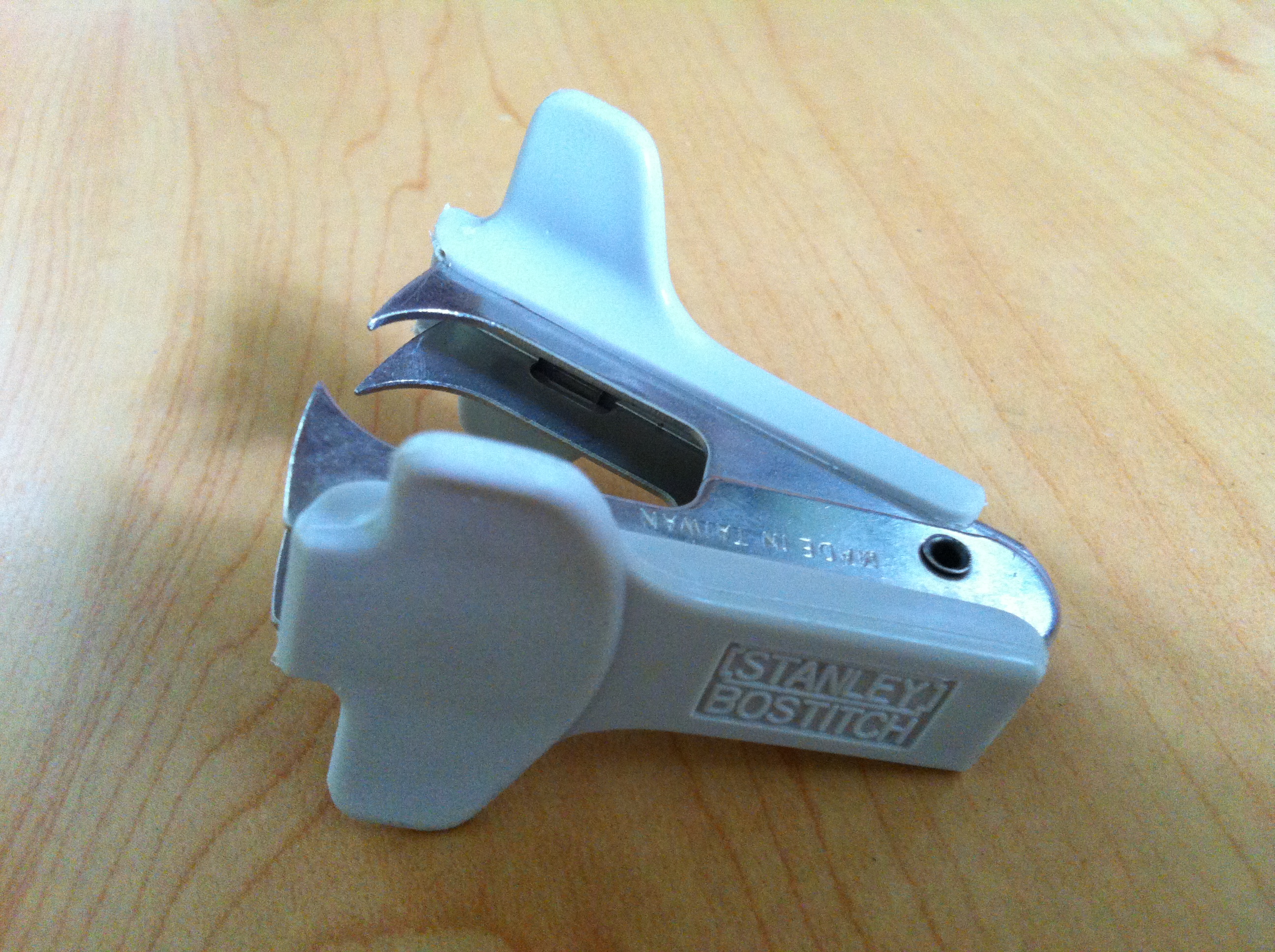
Who would have thought that a small and simple object that (can draw blood if squeezed into a finger but otherwise) appears relatively harmless could blow your entire estate plan?

The common staple remover. An enemy of well-drafted last will and testaments and well-made estate plans nationwide.

photo-19

[Note: This post was written while I was a practicing attorney running a diverse solo law practice, and it is one of a small number of “legacy posts” that I have retained on the site. When published, this was one of my most popular posts. Since April 2015, I have been working as an executive coach and writer, and I am not currently available for legal engagements.]

Here’s what I tell my clients:

Never, ever unstaple a will. Never, ever, ever. And did I mention never, ever? Don’t do it!

To drive home the point with a memorable comparison, I even have joked with some clients on occasion that unstapling a will is like having an affair. (I only say this when I am pretty well assured the joke will be properly received.) You can try to put it – i.e., the marriage or the will – back together again, but it will never go back exactly the same as it was before. There are always some holes that cannot be filled and some room for distrust that it is difficult to overcome.

There are always some holes that cannot be filled and
some room for distrust that it is difficult to overcome.

Unstapling a will can call the entire document into question. Was a page added or removed? Is it a complete and properly ordered copy? Even if the pages are numbered and initialed, how can we (sometimes many years later) be sure that no one did an artful yet fraudulent switch of parts of the document he/she did not like?

It is such a serious issue that, if a will is to be proven in probate court as the correct, complete and valid original last will and testament, there is a process of submitting an affidavit by the person who unstapled the will, discussing the reason for the unstapling, when and how it happened, and by whom. The court is understandably concerned that there was no foul play involved, and wills with multiple staple holes are regarded with suspicion.

So what should you do instead, if you need a copy of your will?

If you need a copy of your will, you should make a copy of a copy, not of the original. Or you can make a copy of the original without unstapling it, making sure that you do not damage any of the pages in the process. It’s not a good idea to have too many copies of your will floating around in any case, since you may wish to change it later and do not want someone with an older copy trying to challenge the later will. If you have any doubts, contact your local estate planning attorney before taking action that can have serious legal consequences to one of the most important documents in your legal life.

So let’s not forget. I repeat:  Never, ever unstaple your will! Never, ever!

None of the information posted on this site constitutes legal advice or forms an attorney-client relationship.