Interview Prep – Book & Checklist

Most of my readers know that I have been busy “creating things” (and even started learning Italian) during the pandemic, but I have not posted anything new on this blog for quite a while!

Since my last post, some important aspects of my coaching practice have shifted, but in other ways it has stayed the same.

One change, of course, is that I have continued to refine my approach over the last two years. Serving as the Facilitator for the PODER25 program of the Hispanic National Bar Association in 2020-2021 afforded me incredibly rich new insights, and more recently I have also been facilitating cohort programs of my own.

Another happy development is that I have been humbly informed by a growing number of clients that they reached out to me as a coach on the basis of reading one or both of my books. A few have even held it up on the Zoom call to show me their flagged and dog-eared copies. What an amazing thing for an author to hear, and I am incredibly grateful!

Master the Interview, available on Amazon and other bookseller sites worldwide.

Among these and other changes (the pandemic included) since I published my first book – Master the Interview – in 2016, I have decided to release a second edition. If you have anything you want to share with me about the book (and interviewing) in the meantime, feel free to reach out.

The Second Edition will include expanded discussions of:

  • Behavioral interviews
  • Compensation negotiations
  • Diverse viewpoints toward the interview process
  • Interviewing for multinational corporations
  • Interviewing with a board of directors
  • And more!

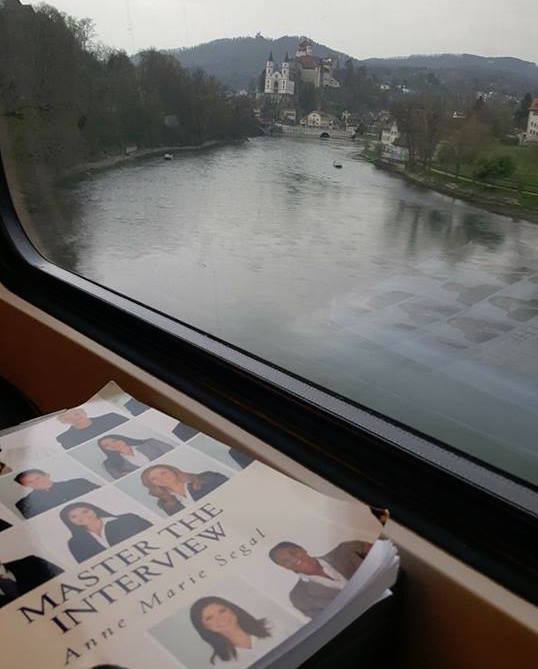
Here’s a lovely image of Master the Interview making its way down the Rhine River in Switzerland, courtesy of a friend and former colleague who read it cover to cover.

In honor of the upcoming Second Edition and my restarting this blog, I am sharing my GC Interview Preparation Checklist (which is also very helpful for other C-Suite and senior roles):

Thanks all!

Yoga Mantra: Let Your Eyes Close (Yes, Really, Even Now)

What do this pandemic and my current mantra of closing your eyes teach us about true freedom, while so many of us are suffering on the front lines or sheltering in place? And how does that relate to what we do in our careers?

As my frequent readers know, I launched a short series this year that ties my yoga practice to my work as a career coach.

Each new post highlights one of the instructions yoga teachers often give their students. These simple phrases can serve as mantras for our daily lives, including our careers.

January – Set an Intention

February – Take a Comfortable Seat

March (this post) – Let Your Eyes Close

When I conceived of the Yoga Mantra series back in December 2019, none of us imagined we would be facing a global pandemic such as COVID-19. 

At the time, I felt as though I was taking a bold step by expanding my highly practical, hands-on coaching approach to add (what could be seen as) a less obvious angle. Would my clients and greater audience – who are mostly attorneys and other highly trained, process-oriented and results-driven professionals – find a discussion of yoga to be at odds with my commitment to focusing on steps they can take right now to get the greatest return on their efforts?

After all, yoga (like meditation, T’ai Chi, reiki and other healing practices and arts) is not intended to bring immediate results. It can, in fact, transform our lives from the very first time we try it. Yet its effects are more often the result of accumulated effort. Or rather, accumulated periods of time in which we release ourselves from effort, trying and striving. Periods of time in which we allow ourselves not to calculate the distance from Point A to Point B but instead to live the journey.

So much has changed in the world since December 2019 (three months ago) or even February 2020 (one month ago). In my case, as an all-too-common example, our local public schools have been closed and converted to distance learning since March 13, 2020. And while the school district has given us estimated dates of reopening (currently April 20, 2020), like other schools cross the U.S. and beyond, they may remain closed until the next academic school year. This is simply one change among countless to our daily lives.

On a global scale, our ability to predict what will happen next – indeed, to live a “predictable life” – has greatly diminished. At the same time, our need for adaptive skills in our careers and general lives has greatly increased:

– facing the unknown,

– rising to the occasion,

– making thoughtful decisions, and

– persevering (ideally thriving) with limited information and constantly changing circumstances.

These needs harken back to the reason I originally launched this series. I have found that too often, people want quick fixes, an “answer” to solve the problem de jour (i.e., urgent matter of the day). Yet changes that actually move the needle in our lives cannot be rushed. A quick flash of insight can create a transformative moment, but the transformation itself (almost invariably) requires a longer period of implementation to take root and create the greatest effect.

Let me give you an example. Say that you move to a bigger apartment so you can have more space. In the first few days or weeks, you might arrive with all of your furniture and boxes, unpack and feel the glory and heightened freedom of your new surroundings. You may feel a new “leash on life” and relish a home environment where so many more things are possible. But if you (quickly or over time) start to fill that space so that it is just as crowded as your old one, the realm of possibility diminishes. You will again feel constricted and constrained.

The same thing happens in the rest of our lives, including in our careers. If you move to a bigger or different role with more space to create impact in or through an organization, but you quickly crowd your days with non-impactful meetings and activities, your new position can feel just as constrained and ineffectual as the old one.

So what do this pandemic and my current mantra of closing your eyes teach us about true freedom, while so many of us are suffering on the front lines or sheltering in place? And how does that relate to what we do on the career front?

First, we cannot control outcomes. We can do our best to create what we seek, but we ultimately can either make our peace with our lack of control or continue to resist (and increase our suffering as a result). Some of us are unemployed or underemployed. Others are “overemployed,” i.e., burdened with the herculean responsibility of strategizing, leading, fixing, triaging, foraging, vetting or otherwise holding the fort during this unprecedented time.

In either case, we can only sit with what is true at this moment. That’s all we have.

Second, turning inward is a healing act. When we close our eyes or soften our gaze, we are not shutting out the world over the longer term. We are restoring our strength so that we can go back out into it. While the world needs more heroes, those heroes need to give themselves permission to recharge. In yoga classes, if you listen closely, you may notice that instructors often suggest you “let your eyes close” rather than “close your eyes.” The first is an act of allowing yourself (to do something), not an act of will.

Allow yourself to turn inward – even if it’s only a few moments of an hour or a few minutes of the day – without worry that you are missing something or failing to complete an urgent task. Changes and tasks will always be waiting for you, and your ability to rise to those changes and tasks will be greatly enhanced if you periodically take time to refresh and center yourself.

Third, our wish not to be vulnerable is illusory. 

I took this self-portrait (eyes closed, feeling vulnerable) in my office a couple of months ago, well before coronavirus dominated our daily lives and our 24/7 news cycle. As I envisioned the post I might write to accompany it, I planned to take some time to explain vulnerability and the macho (toxic) culture of many work environments that seek to stamp out any whiff of weakness.

Yet this week, as senior leaders of across all ranks and ranges of organizations took work-from-home (WFH) videoconference calls with anxious children and barking dogs in the background – and came together over it, rather than judging their colleagues and counterparts for a lack of “discretion” – our collective take on vulnerability has been momentarily suspended. Being vulnerable is a trait we all share, and we can clearly see that through this pandemic. Families are to be protected, not silenced. Lives are to be valued, not treated as something to be fit between more pressing obligations. Vulnerability is something to be recognized as part and parcel of the human condition, as it cannot be avoided.

Anne Marie Segal - eyes closed

Fourth, for a change to last, it must continue to represent our values. Many of us have learned this in other contexts, through other challenges, but what lasting individual and collective change we will carry forward from COVID-19 remains to be seen.

We know that life as usual has been irrevocably altered, but whether those alterations bring us to a better place or simply call for heightened vigilance is a matter of our long-term values. Again, by periodically softening our gaze to the whirlwind of activity, news, adversity and (in some heartbreaking cases) trauma, we can start and continue to ask ourselves where we can find meaning, experience large or small joys of the present moment and build bridges to the direction we are called (both personally and professionally) to follow next.

Be safe. Support those on the front lines. And, from time to time, close your eyes.


Anne Marie Segal is an executive coach and writer based in Connecticut, not far from New York City, and is sheltering at home with her family (dog, cat, husband and two teenagers who are remarkably committed to flattening the curve).

Yoga Mantra: Take a Comfortable Seat (In Your Career)

Welcome to a new decade and my first article in a monthly series, Off the Mat: Yoga Mantras for the Modern Career.

Through this new series, I am creating a space in which I can support clients and readers who are interested in and receptive to furthering their yogic wisdom by providing a means to translate yoga principles to their careers.

This month’s mantra is fitting for the New Year and often incorporated into yoga classes during the first few days of the year (and other times): set an intention.

Yoga Mantras for the Modern Career

If you have ever been to a yoga class, you know that you are often invited to “take a comfortable seat.” You can sit on the floor or on a yoga block, bolster or zafu meditation cushion, and you are encouraged to choose the position that is most comfortable for you.

Relatively comfortable, that is. Not “cozy all tucked in your bed” comfortable, but the seat that feels most relaxed but allows you to stay alert at the same time.

Many of us, at least in the West, are not as accustomed to sitting without a chair or couch that has a back to rest on. We have do not have our core muscles sufficiently developed to keep our spine straight and pelvis stabilized. As we learn how to engage those muscles, we might be encouraged to imagine the pelvis like a bowl that can be tilted forward or back. Your goal is to find the right angle for proper alignment – keep the pelvic bowl level so you don’t (by analogy) spill the soup!

Yoga teachers, for example, may remind us to extend our spine from our sacrum to the base of our skull and relax our neck so our heads feel like they are simply floating. The image helps you internalize the ease and space you can create for yourself. A key takeaway is that we create much less stress in our bodies if we are in optimum alignment and can relax whatever muscles are not needed to maintain the pose.

That’s what you’ll learn in a yoga class – if you have the right teacher – and you can also learn similar concepts from a physical therapist, chiropractor or other health professional. The point of the comfortable seat in yoga, of course, is to help you free yourself (mind, body and spirit) for the work that you’ll do while seated in the class and be able to take that with you as you move off the mat. 

THE “COMFORTABLE SEAT” OF YOUR CAREER

As I mentioned in my first article in this series, Yoga Mantras for the Modern Career is focused on translating yoga wisdom to our professional lives.

We can take the suggestion to “take a comfortable seat” literally, creating an ergonomic workplace and striving for good posture that allows us to relax and our energy to flow freely up and down our spines. That would be a great extension of the yogic wisdom of the phrase.

Yet the concept of the comfortable seat can also be imagined as moving beyond the literal and into the higher plane of how you align yourself professionally. The idea of relaxing while maintaining alertness – holding both of these goals in your mind simultaneously – is the aspect of the comfortable seat that gives us the richest metaphor applicable to our careers.

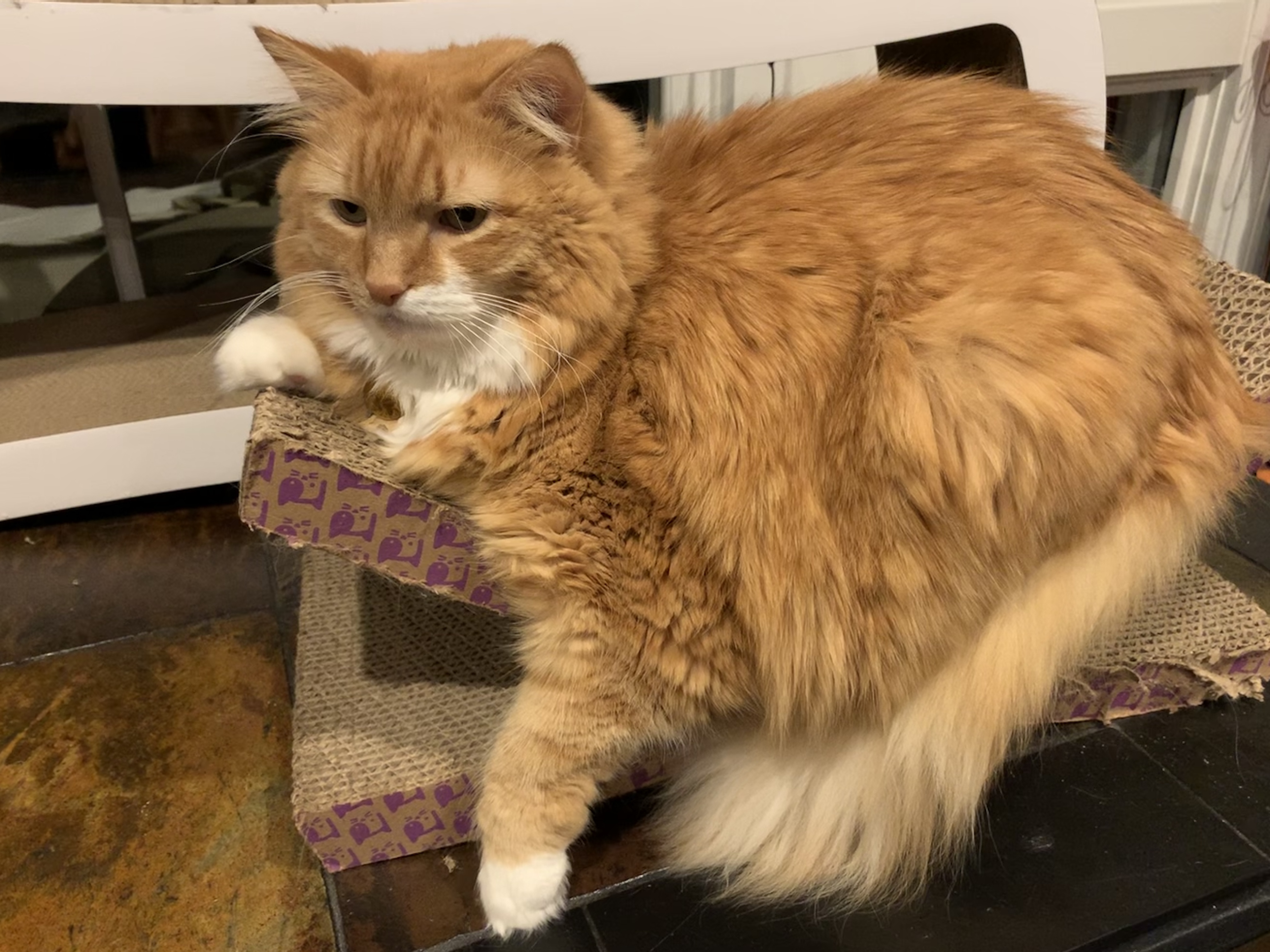
If you are getting hung up on the words pelvic bowl and spinal alignment, just imagine a cat. They are the masters of relaxed alertness, as they are able to sink comfortably and entirely into a space – as if they have not an ounce of tension in their bodies – yet be on the ready should their environment change on a moment’s notice. 

IMG_6162

Rather than arriving at a comfortable posture, many of us tilt (our career, if not our pelvis) too far forward or too far back. On the one end, we push too far into the future or in one direction or another, hurried and dissatisfied with ourselves, our choices, responses from others or the progress we have made in our careers. On the other end, we may fail to be sufficiently forward-looking, resting on our laurels or even feeling overwhelmed defeated and therefore falling back in our (again metaphorical) seats. In either case, we are not using our core strength to keep us balanced, centered and at ease.

When we are not setting ourselves up for ease, we need to devote more of our energies to maintaining our current position and have less energy available to access the opportunities that would present themselves if we were in an optimum state. When we are not alert, we can become complacent and miss those opportunities. The wisdom is to find the balance that brings both of these states together. 

How can you achieve the optimum state of relaxed alertness in your career?
What would be different if you did?


Anne Marie Segal 
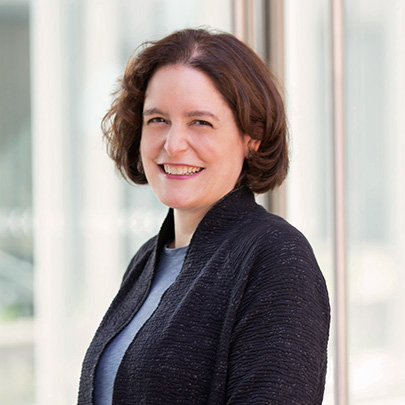
is an executive coach, resume writer and author of two well-received books on interviewing and career development. She served as a corporate attorney for 15 years, including roles at White & Case LLP and a prominent hedge and private equity fund manager, before launching her coaching practice. In addition to her career coach and resume writer certifications, she is a certified yoga teacher. 

Based in Connecticut not far from New York City, Anne Marie partners with clients internationally on executive presence, impactful communications, graceful transitions and other aspects of professional and personal development. 

This article is not medical advice. It is career advice!

Second image above copyright 2020 Anne Marie Segal. All rights reserved.

The Year of Leveling Up: January 2020 Redux

It’s (still kind of, sort of) the New Year. Only 339 days until year end.

It would be 338, but it’s a leap year in 2020.

I’m not trying to be ironic, but that is the ironic thing about years. They feel all bright, shiny and new when we start them. Then the days pass one by one. Today, it’s January 27. Has your new year glow worn off already, or is each day a new day and a new opportunity?

Soon it will be March, July and even October. Shortly after that, we are back to the end (of the year) again.

Then it’s another New Year’s celebration, a ride on the crest of the New Year wave, through another stretch of calm, a long haul up through mid-December and a detox break over the holidays.

Or however the cycle works for you.

Does it work for you or are you a slave to the cycle?

Hamster running in circle on wooden table

FOR MORE JANUARY 2020 REDUX, MY MONTHLY MAILING IS HERE.

IN THIS ISSUE:

Articulating Your Vision for a Corporate Board Role

Corporate Board Resources

Sandy Baggett: Our First Modern Career Warrior

Cathy Sorbara: Upcoming MCW

About the Modern Career Warriors Series

Job Search Success in Your 40s, 50s and Beyond

Yoga Mantras for the Modern Career

Befriend Your Inner Naysayer

Accelerating Your Job Search as a Junior Associate Targeting In-House Roles

What Can You Learn Before Year End?

Guest Teaching at Lehman College and Why Buy Low, Sell High Also Works for Recruiting

The Library @ AnneMarieSegal.com

Join the 28-Day Career Mindset Journey (small-group coaching)

To read our prior issues, click on the links below:

Down with excuses. Time for a change.

My best advice for 2020. It’s not what you think.


Anne Marie Segal Post Banner

Anne Marie Segal, founder of Segal Coaching LLC, is an executive coach, resume writer and author of two well-received books on interviewing and career development. She served as a corporate attorney for 15 years, including roles at White & Case LLP and a prominent hedge and private equity fund manager, before launching her coaching practice.

Based in Connecticut not far from New York City, Anne Marie partners with clients internationally on executive presence, impactful communications, graceful transitions and other aspects of professional and personal development.

Yoga Mantra for January 2020: Set an Intention for the New Year

Welcome to a new decade and my first article in a monthly series, Off the Mat: Yoga Mantras for the Modern Career.

Through this new series, I am creating a space in which I can support clients and readers who are interested in and receptive to furthering their yogic wisdom by providing a means to translate yoga principles to their careers.

This month’s mantra is fitting for the New Year and often incorporated into yoga classes during the first few days of the year (and other times): set an intention.

Yoga Mantras for the Modern Career

Welcome to a new decade and my first article in a short series, Off the Mat: Yoga Mantras for the Modern Career.

WHY I AM WRITING THIS SERIES

When I work with clients, I often incorporate wisdom accessed from my yoga training – I became a certified yoga teacher in 2012 – and ongoing practice.

I am not always explicit about yoga as the source of such wisdom, however, because not everyone finds yoga accessible or personally meaningful to their own lives.

Through this new series, I am creating a space in which I can support clients and readers – among those who are interested in and receptive to furthering their yoga wisdom – by providing a means to translate yoga principles to their careers.

Essentially, in this series I bring yoga to the foreground. Yet these aren’t yoga lessons in the traditional sense. I won’t teach half moon pose, alternate nostril breathing or how to flip your dog. In Yoga Mantras for the Modern Career, we are explicitly taking our yoga off the mat.

How can a (new or existing) yoga practice enlighten your career? How can you integrate what you learn on the mat into your personal or professional life?

This series is my gift to you. In the spirit of yoga, take what serves you and leave the rest.

YOGA MANTRAS

There are traditional yoga mantras straight from the Upanishads, such as Lokah samastah sukinoh bhavantu (translation: may all beings everywhere be happy and free), and more contemporary mantras based on yoga principles.

In Yoga Mantras for the Modern Career, I am building on the idea that every action in our lives can be a meditation and every instruction in a yoga class, however small, can become a mantra.

More specifically, since this site is about leadership, professional development and related areas, the mantras in this series will be in support of your life and career. 

THIS MONTH’S YOGA MANTRA:
SETTING AN INTENTION

This month’s mantra is fitting for the New Year and often incorporated into yoga classes during the first few days of the year (and other times): set an intention.

When we set an intention in yoga practice, we do it in present tense, such as:

I live in the present moment.

The goal is not simply to have your intention on the mat (while practicing yoga) but to take it with you as you move off the mat (into the rest of your life). In the context of your personal and professional life, you might set another intention that serves you:

I have a great career.

I speak fluent Spanish.

I live in New York City.

An intention is stated in present tense, even if it is not your current state. By wording it in the present, you can see yourself as if you have already achieved – and thereby activate the power of – your intention.

Once articulated, your vision is transformed into action through:

  1. continuing to bring your awareness back to the intention,
  2. maintaining a commitment to the intention (for yogis, this is the tapas or fiery discipline of the Niyamas),
  3. holding a confident belief you can achieve it, and
  4. taking active steps to realize your intention.

When clients come to me seeking a career change, promotion or new job, for example, we work (explicitly or implicitly) on some or all aspects of the above.

First, I help them clarify, articulate and prioritize their intention.

On a very granular level, what does it mean to you to have a great career? (This is a version of the classic coaching question, “What does success look like for you?”) 

What is working in your professional life, what needs to change and what specifically would that change look like?

What are the obvious and not so obvious things that would need to shift?

What would you be doing on a day-to-day level (which type of projects, what type of team or individual work, what working environment, how much oversight, etc.)?

The more you can clarify your intention, the more effectively you can keep it on the front burner and take concrete steps to realize it. You may also find that a more specific career or other intention will not only enable a richer and more robust visualization but also increase your ability to keep your awareness on the intention rather than giving way to the inevitable distractions that each moment presents.

Second, we work on increasing their confidence. 

You may have confidence across many aspects of your life, but to achieve your intention you need to have the confidence that you can actually bring it to fruition and maintain that confidence through the process of creating the reality your intention represents.

Third, we devise active, effective steps to realize their intention.

This third aspect works in tandem with the second one, as your confidence will increase as you outline and begin to take active steps to put your intention into action. This may include, for example, moving out of your comfort zone, acquiring new skills or meeting people who can help you realize your goal.

Since the steps to creating a great career may be very specific to your individual case, let’s take a look at the implementation plan for a more universal intention, like foreign language acquisition. If your intention is to be fluent in Spanish, you may decide to take some or all of the following steps:

  • launch a weekly “Spanish table”  lunch group or other gatherings among friends or colleagues,
  • find and listen to Spanish-language podcasts or songs during your morning commute, 
  • engage in community service that exposes you to native Spanish speakers,
  • make a list of and watch top or classic movies or TV shows in Spanish (with or without English subtitles), from an Almodovar classic to Roma or even Jane the Virgin (which is partially in Spanish),
  • hire (or barter English lessons with) a Spanish tutor,
  • get and use magnets and/or flashcards with words and pictures in Spanish,
  • keep a diary in Spanish,
  • read books or magazines in Spanish,
  • do yoga in Spanish (hint: you can get your perro hacia abajo (down dog) going with a plethora of YouTube videos for every range of fitness level and special interest), and/or
  • prepare for and take one or more trips to Spain or Latin America during the year.

The overarching theme is to come at the same intention from a variety of perspectives – in this case, to create an immersion in the Spanish language – which is the same advice I would give for your career or any other aspect of your life.

Remember that part of the wisdom of putting your intention in the present tense is to recognize that you may not need to start from scratch or make a 180-degree turn to realize your goal. If your intention is to have a great career, you may start with recognizing what is already “great” about the current state of your professional life. Do you hold a leadership role? Have a great team? Relish the intellectual challenge? Make a lasting contribution to a cause you support?

If your intention is to be fluent in Spanish, build on what you already do and cherish in your life. So if you are an avid cook, you can start to follow recipes from cookbooks written in Spanish or talk yourself through the steps of your cooking in Spanish and explore any words you are missing. For example, in the phrase “ahora, voy a poner el agua a hervir….” if you don’t know the word for boil (hervir) or always forget that water (agua) uses the article “el” rather than “la,” you can remember both in the context of the sentence.

Although I spend a lot of time above giving examples of steps to illustrate the importance of putting your intention into action, the execution process is not more important than the setting of the intention in the first place. (It simply has more steps, as an intention by its nature is short and sweet.)

You can have the best implementation plan in the world, but if you don’t keep your intention alive and continue to bring your awareness back to it, outlining the steps will get you nowhere. We will meet here again month after month, New Year after New Year, and you will ask me why you have not (sufficiently) progressed. I am certain that is not what you seek!

Instead, post your intention at the top of your mat or on your bathroom mirror – literally, with a sticker or sticky note – and return to it every day.

MY OWN INTENTION FOR 2020

My own intention for the New Year is the first one written above:

I live in the present moment.

Carter at the Beach for New Year's

At Compo Beach for New Year's

Yesterday, on January 1, I took my dog (Carter) to Compo Beach for the first time. It was windy and cold but lovely nonetheless. Carter was ecstatic, and I had lot of fun keeping pace as he raced and frolicked across the beach.

Today is a new day and another chance to reset or refine my intention. 

Happy New Year! What’s your intention?


Anne Marie Segal 
is an executive coach, resume writer and author of two well-received books on interviewing and career development. She served as a corporate attorney for 15 years, including roles at White & Case LLP and a prominent hedge and private equity fund manager, before launching her coaching practice. In addition to her career coach and resume writer certifications, she is a certified yoga teacher. 

Based in Connecticut not far from New York City, Anne Marie partners with clients internationally on executive presence, impactful communications, graceful transitions and other aspects of professional and personal development. 

Second and third images above copyright 2020 Anne Marie Segal. All rights reserved.

Four Leadership Traits of High-Performing General Counsel (Women GC’s Speak)

This week I attended “Women GC’s Speak,” a New York City Bar Association panel moderated by Debbie Epstein Henry. Among the four General Counsel panelists, the leadership message was exceedingly clear:

Take on challenges,

find opportunities,

push yourself to be a little uncomfortable,

fill leadership gaps, and

figure it out.


Women GC's Panel image - 11-6-19 - NYC Bar.jpg

Panelists and moderator, from left to right: Ayssa Harvey Dawson, Cari Robinson, Debbie Epstein Henry (moderator), Romy Horn and Sonia Low. Photograph copyright 2019 Anne Marie Segal. All rights reserved.
Here are four specific insights the panelists shared that echo and underscore the coaching work I do with my General Counsel clients:

Romy Horn, General Counsel of the W2O Group, suggested that among the business aspects a law firm attorney (for example) needs to learn to transition into a GC role, there is one key aspect that many would-be General Counsel fail to grasp:

“Finance. [To be a trusted advisor and excel in a GC role], lawyers in companies need to understand the financial aspects of what they are doing.”

Sonia Low, VP, General Counsel and Secretary of the Jacob K. Javits Convention Center, reminded the audience that GCs are valued not for reciting the law but for helping senior leaders and others meet their business goals. To be a problem solver and transcend the legal function, don’t be afraid to ask:

“Can I come with you to these conventions? I’d like to meet more CEOs and CFOs, so I can better understand what drives them.”

Ayssa Harvey Dawson, General Counsel, Head of Legal, Privacy and Data Governance of Sidewalk Labs, shared that too many attorneys are caught in the “qualifications” trap and talk themselves out of opportunities as a result.

“Qualifications are subjective. When my last company was bought, I thought to myself, what do I want to do next? What I have learned from that is to never be afraid to embrace change.”

Cari Robinson, Executive Vice President and General Counsel of Revlon, echoed that advice, adding that you are never going to know everything about a business, especially if you change industries, so:

“You can’t be bashful about asking people to slow down and explain things to you.”

Robinson also shared two essential factors that have helped her succeed as a GC:

first, her global litigation background, which showed her “a little piece of a lot of things” that collectively taught her “how to think about business” and made her a very nimble attorney, ready to face any opportunity, challenge or crisis situationand

second, her evolution from a focus on building her own career to supporting and building out her team.

For more information about this panel and the sponsoring committees, click here.

Anne Marie Segal is a career and leadership coach, writer and resume writer for attorneys, executives and entrepreneurs. In her practice serving lawyers, she coaches General Counsels, law firm partners, counsel and associates, as well as government, academic and non-profit attorneys.


Should You Attach Your Resume to Your LinkedIn Profile?

Have you often wondered if you should attach your resume to your LinkedIn profile? Maybe it would help boost your job search?

Don’t.

Why not?

1) If your home address is on it – which it shouldn’t be; only use city, state and zip or equivalent – you are putting your information at risk for identity theft.

2) You also may find (or never know) that people are borrowing your information and creating a resume that is essentially a copy of yours with another name on it. Because they do not need to post that publicly – unlike a LI profile – they can secretly trade on your goodwill and dilute your brand.

3) If you have one form of resume posted on LinkedIn and bring another (targeted) resume to an interview, you may compromise your credibility (i.e., if the two versions do not to match).

In other words, you will have less control of your personal branding in the interview because your audience will have already seen your resume. They may not even read a new one.

Instead of attaching a resume, put the important information and keywords directly into your profile, so the LinkedIn algorithm can do its work to match you to the right jobs.


Website Anne Marie Segal 2019 Barragan Square Say CheeseFor more LinkedIn tips, click here.

To find or follow me on LinkedIn, click here.

– Anne Marie Segal, Executive Coach


Image of Anne Marie: Copyright 2019 Alejandro Barragan IV. All rights reserved. 

Remaining images: Adobe Images.