Optimizing Your Transition Into a New Role: The 30/60/90-Day Plan

As you start a new job or take on a significant promotion, implementing a 30/60/90-day transition plan will help organize and optimize your first 90 days in the role.

You have likely spent weeks, months or even years seeking out and securing the next step in your career. Once settled, it might be tempting to celebrate, give notice to your current employer, hunker down (or enjoy a brief vacation) and then jump right into the mix. But what if you could create a more deliberate entry point for greater success and to ease your transition?

Through my work as an executive coach, I have witnessed time and again that the final step in a successful job transition is not accepting the offer. Candidates who make the greatest and most lasting impact consistently prepare themselves ahead of time for those critical first few months in their new role.

Herein lies the genius of a well-devised plan.

Recognizing Why You Need A Plan

When I work with coaching clients to develop 30/60/90-day plans, I invariably start by sharing this article by David Gee, which he wrote about his first 90 days as the chief investment officer of Credit Union Australia Limited.

As Gee attested, and as many of us have experienced over our own careers, either we set an agenda and priorities for a new role or our days are quickly overrun by the sheer volume of activity. Gee wrote, “I learnt very quickly that events and meetings would consume me unless I was clear where I wanted to focus my time and energy.”

While you may enter a role with the expectation of a fresh start and ample ramp-up time, work often takes on a life of its own as early as the first day or week on the job. Communicating an actionable 30/60/90-day plan to your team goes a long way in ensuring you are doing the right things among the busyness of business.

Structuring Your Plan

If you are not familiar with 30/60/90-day transition plans, Gee’s article offers an excellent overview. He structured his plan as a chart with “People,” “Process” and “Technology” as headers. Within each, he defined high-level departure points to guide his execution of top priorities, such as:

What does success look like?

What are the CEO’s expectations?

Who are the key players (outlined in a stakeholder analysis and influence map)?

Gee’s chart features both a high-level structure and sufficient detail to keep him on track. As you review it, reflect on the relevant questions and guiding principles for your own plan and how to best structure what you want and need to make your greatest sustainable impact in the first 90 days.

Individualizing Your Plan

One of my C-level clients, let’s call her Jordan, structured her own 30/60/90-day plan as follows:

In successive rows of her header column, Jordan listed her main constituents (board of directors, CEO, other C-suite leaders, regional managers and her team) followed by top anticipated projects and other areas to address. In the remaining columns across her chart, she mapped her goals for each over 30, 60 and 90 days.

While Jordan would have valued time to settle into her role before leaping into action, she was hired by her new CEO on the assumption she would swiftly shore up certain trouble spots in the organization (and be compensated accordingly).

On her plate was to help realign a splintered board of directors, merge diverse geographical regions under a smaller subset of managers and replace two key employees (which she labeled as Projects A, B and C), all while meeting the overarching goals of increasing revenue and raising the organization’s reputation in the marketplace.

People – Impact

30 Days 60 Days 90 Days
Board of Directors
CEO
Team
Project A
Project B
Project C

By breaking up each of Projects A, B and C into achievable goals over manageable periods, Jordan could better predict the steps, time investment and travel schedule she would need to tackle each one. She also could clearly map out how her efforts across these projects would support larger organizational goals.

Tempted to triage and move to execute on each of these projects as soon as possible, Jordan nonetheless recognized that she first needed to set the tone and goals for her own team. She devoted the mornings of her first week at her new office to meeting with team members individually and spent afternoons on conference calls discussing each project in turn. In this way, she gained clarity, demonstrated authority and made initial progress on all key areas, as well as with her team.

Jordan then devised a tight yet manageable travel schedule for the following three weeks. She planned flights to five cities over two trips—making creative use of layovers—with a short break in-between. This put her face to face with individuals (scattered across the country) who were critical to her understanding of long-standing issues and generation of practical, optimal solutions.
AdobeStock_92595365 (priorities).jpg

Setting and Achieving Your Priorities

As you reflect on Gee’s and Jordan’s plans and devise your own, you may wish to include some agenda items from Gee’s chart:

  • Building relationships, coalitions and your team.
  • Branding yourself.
  • Setting the time to reflect.
  • Establishing and monitoring key personal metrics.
  • Ensuring accountability.
  • Executing quick wins that can foreshadow more substantial improvements.

Gee took pains to meet as many people in the organization as possible in his early days in the role. Speaking from a position of leadership, he also told his team what he stood for, how he liked to work and what he expected from them. Finally, he made sure that his progress, as measured against his 30/60/90-day plan and more generally, was “very visible” to his manager and team.

While a 30/60/90-day plan cannot guarantee success in a new role, outlining high-level goals and priorities with an accompanying action plan will facilitate the right mindset and allow for more seamless execution. Seek feedback from others as appropriate – either prior to your new role or in the first days at the office – and make sure to consider and include enterprise, team and individual goals.

Anne Marie Segal is an executive coach, resume writer and author of two well-received books on interviewing and career development. She served as a corporate attorney for 15 years before launching her coaching practice. The above article, other than the chart (added here), was originally published as a Forbes Coaches Council post and available here.

Image above: Adobe Stock.
Four Leadership Traits of High-Performing General Counsel (Women GC’s Speak)

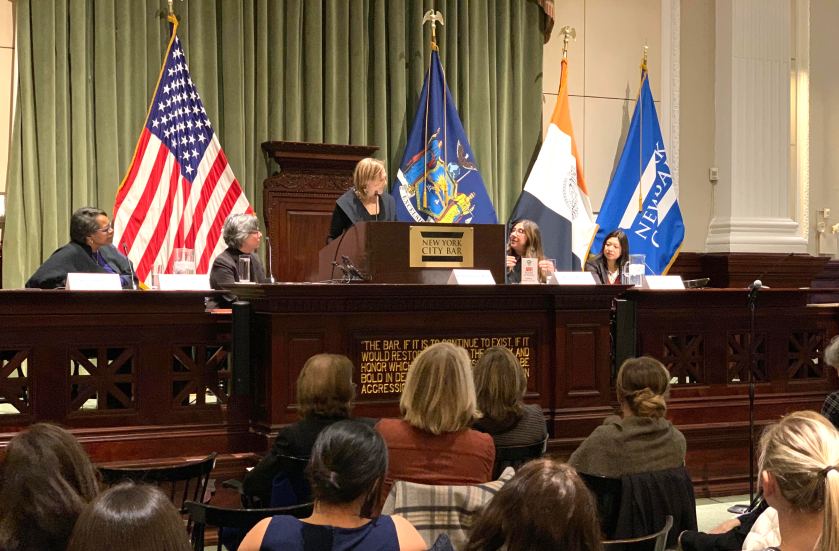
This week I attended “Women GC’s Speak,” a New York City Bar Association panel moderated by Debbie Epstein Henry. Among the four General Counsel panelists, the leadership message was exceedingly clear:

Take on challenges,

find opportunities,

push yourself to be a little uncomfortable,

fill leadership gaps, and

figure it out.


Women GC's Panel image - 11-6-19 - NYC Bar.jpg

Panelists and moderator, from left to right: Ayssa Harvey Dawson, Cari Robinson, Debbie Epstein Henry (moderator), Romy Horn and Sonia Low. Photograph copyright 2019 Anne Marie Segal. All rights reserved.

Here are four specific insights the panelists shared that echo and underscore the coaching work I do with my General Counsel clients:

Romy Horn, General Counsel of the W2O Group, suggested that among the business aspects a law firm attorney (for example) needs to learn to transition into a GC role, there is one key aspect that many would-be General Counsel fail to grasp:

“Finance. [To be a trusted advisor and excel in a GC role], lawyers in companies need to understand the financial aspects of what they are doing.”

Sonia Low, VP, General Counsel and Secretary of the Jacob K. Javits Convention Center, reminded the audience that GCs are valued not for reciting the law but for helping senior leaders and others meet their business goals. To be a problem solver and transcend the legal function, don’t be afraid to ask:

“Can I come with you to these conventions? I’d like to meet more CEOs and CFOs, so I can better understand what drives them.”

Ayssa Harvey Dawson, General Counsel, Head of Legal, Privacy and Data Governance of Sidewalk Labs, shared that too many attorneys are caught in the “qualifications” trap and talk themselves out of opportunities as a result.

“Qualifications are subjective. When my last company was bought, I thought to myself, what do I want to do next? What I have learned from that is to never be afraid to embrace change.”

Cari Robinson, Executive Vice President and General Counsel of Revlon, echoed that advice, adding that you are never going to know everything about a business, especially if you change industries, so:

“You can’t be bashful about asking people to slow down and explain things to you.”

Robinson also shared two essential factors that have helped her succeed as a GC:

first, her global litigation background, which showed her “a little piece of a lot of things” that collectively taught her “how to think about business” and made her a very nimble attorney, ready to face any opportunity, challenge or crisis situationand

second, her evolution from a focus on building her own career to supporting and building out her team.

For more information about this panel and the sponsoring committees, click here.

Anne Marie Segal is a career and leadership coach, writer and resume writer for attorneys, executives and entrepreneurs. In her practice serving lawyers, she coaches General Counsels, law firm partners, counsel and associates, as well as government, academic and non-profit attorneys.


Should You Attach Your Resume to Your LinkedIn Profile?

Have you often wondered if you should attach your resume to your LinkedIn profile? Maybe it would help boost your job search?

Don’t.

Why not?

1) If your home address is on it – which it shouldn’t be; only use city, state and zip or equivalent – you are putting your information at risk for identity theft.

2) You also may find (or never know) that people are borrowing your information and creating a resume that is essentially a copy of yours with another name on it. Because they do not need to post that publicly – unlike a LI profile – they can secretly trade on your goodwill and dilute your brand.

3) If you have one form of resume posted on LinkedIn and bring another (targeted) resume to an interview, you may compromise your credibility (i.e., if the two versions do not to match).

In other words, you will have less control of your personal branding in the interview because your audience will have already seen your resume. They may not even read a new one.

Instead of attaching a resume, put the important information and keywords directly into your profile, so the LinkedIn algorithm can do its work to match you to the right jobs.


Website Anne Marie Segal 2019 Barragan Square Say CheeseFor more LinkedIn tips, click here.

To find or follow me on LinkedIn, click here.

– Anne Marie Segal, Executive Coach


Image of Anne Marie: Copyright 2019 Alejandro Barragan IV. All rights reserved. 

Remaining images: Adobe Images.

What to Write (and Avoid) in Work Emails to Advance Your Career

I was honored to be quoted recently by Daniel Bortz, a contributor to Monster.com, in13 things you should never write in a work email.”

Ah, the many thoughts and human interchanges that should never be reduced to email, and the myriad of ways you can be too casual (or not enough). Bortz captures a good many of them in his article.

Woman typing on laptop at workplace working in home office hand keyboard.

Conducting the interview for Bortz’s article, and reading it in print, brought me back to my former life as an attorney. At one point, I was tasked with reviewing a large set office correspondence. I skimmed through tons of emails. Thousands, in fact.

While the vast majority were innocuous – as boring as a string of indecisive lunch plans – I saw firsthand more than once how damaging certain private exchanges could be if they ever saw the light of day. 

A quick and poorly thought (or worded) email can do a lot of damage, while a strategic one can enhance your credibility and grow your career.

Bortz is not the first, nor will he be the last, to sound the alarm on the damage – indeed, at times, the unending vortex of negative results – that a quick and poorly thought (or worded) email can do. 

On the other hand, the goal with email is not only to avoid the downsides, but also to communicate, inviting others to respond and take action. So after you check out what to avoid in Bortz’s article, you can read what to include in mine: Four Steps to Creating Emails that Prompt Action and Get Results.

Anne Marie Segal 2019 Web Image Square #2 Copyright Barragan
Anne Marie Segal is an executive coach, author and resume writer. She works with executives, senior attorneys and other leaders to clarify and heighten their personal branding, increase their impact and accelerate professional goals such as Board or C-Suite candidacy, other leadership advancement, career pivots and job transitions.

Image above: Adobe Stock.
Image at left: © 2019 Alejandro Barragan IV. All rights reserved.


Executive Interview Preparation: The Checklist

If you are a typical executive, it’s a challenge to find time on your calendar to prepare for interviews. When you do carve out that space, here’s a checklist of what you should cover.

Businesswoman working in the office

Due diligence – know as much as you can about the target organization and management beforehand, including what they do, why and who else is in the game

If you are extra short on time and not familiar with the market, management team, products or other other important data points, check if there are videos online that you can watch or hear while going about your other activities. 

Common ground – find out what you have in common with your interviewers and who else you might know (or can get to know) at the company; use LinkedIn® and other resources; reach out to colleagues and their networks where appropriate

Posture / Energy – plan how you can gear up on interview day with a power pose; watch your body language in the room (eat well the night before and that morning!)

Confidence – “I can handle it. Here’s what I’ve done that’s analogous….”

Concise, targeted value proposition – why should they hire you? what do you offer?

For phone interviews, you can have this in front of you, with a page for each of your three to five most important points and examples that support each.

Edge – what’s unique about you that others won’t bring to the role?

Curiosity – ask light, open-ended questions to get better answers

Story / Narrative – who are you as a candidate and a person? why is this organization a fit?

Accomplishments – have accomplishments ready to discuss that fit what you will be asked to do in the role; give examples (without revealing proprietary information)

Behavioral or hypothetical questions – be ready for “what would you do if…?” e.g., if the organization is expanding into new markets or lines of business and they hit a snag (legally, reputation-related or otherwise), if an employee came to you with a certain problem or opportunity, how you would handle a poor judgment call by the Board or another senior leader, etc. 

About you – be ready for “tell me about a time when…” e.g., work style, challenges, successes, etc.; have a short list of versatile examples prepared for these questions

Reason for leaving current role – have a positive way to tell the story; negativity doesn’t sell; give a concise answer and move to why current role excites you

Organizational vision – if you will be leading a company or team, share your vision

Resume – know your experience cold, be open to discuss anything on your resume

Gaps – if you have any that are key to the job, be ready to address them head on

Weaknesses – prepare for the ubiquitous “strengths and weaknesses” type questions

Follow-up – ask intelligent questions to determine if it’s a fit, tailored by interviewer

If you falter, do it gracefully – have a plan to recover from surprises

Interview them back – it’s a conversation, not an interrogation

Compensation – be ready to “talk comp” if they ask; know how you’ll approach this conversation and deflect tough questions

Red flags – save the toughest questions for when you have the offer letter in hand, but note them so you don’t forget

Re-read the job description (if any): prepare for any point that might come up; research terms you don’t know, so you can sound intelligent on what you might be asked

Concise answers – answer the questions asked; avoid tangents; speak to your value

Close well – find out next steps on their end; know yours; if you want the job, make it known

If you need help formulating a personal value proposition, check out my worksheets here.

Congratulations on your interview! Best of luck!

Anne Marie Segal - Web Image (Credit Alejandro Barragan IV)

Anne Marie Segal is an executive coach, resume writer, Forbes Coaches Council member and author of two well-received books on interviewing and career development. She was a corporate attorney for 15 years before launching her coaching practice.

Image above: Adobe Stock.

Want to Know More About LinkedIn®? For UChicago Alumni and Guests: Webinar on Thursday, March 14, 2019

If you want to get up to speed quickly on a range of topics related to LinkedIn, I am presenting a one-hour webinar this Thursday for The University of Chicago’s Alumni Association.

It’s called LinkedIn for Job Search, Networking and Career Building, and it’s free for UChicago alumni and invited guests (including you!) with the link.

Is LinkedIn a platform that you want to make work for you, but you haven’t had time to figure out how to do that?

Do you struggle to write your LinkedIn profile?

Are you worried that you may be missing opportunities because you are not more active on LinkedIn?

Do you want to know how recruiters use LinkedIn’s powerful search features, powered by artificial intelligence and machine learning?

Asian businesswoman in formal suit working with computer laptop for Polygonal brain shape of an artificial intelligence with various icon of smart city Internet of Things, AI and business IOT concept


UCHICAGO WEBINAR

If you want to get up to speed quickly on a range of topics related to LinkedIn, I am presenting a one-hour webinar this Thursday, March 14, 2019, for The University of Chicago’s Alumni Association.

It’s called LinkedIn for Job Search, Networking and Career Building, and it’s free for UChicago alumni and invited guests (including you!) with the link.

Thursday, March 14, 2019
12:00 pm CST
Cost: Free

MindYourCareer_WebinarSeries


LinkedIn is simply the most powerful online tool for job search and career building today, and it keeps evolving. In this webinar, executive coach and writer Anne Marie Segal discusses how to build your credibility and opportunities on LinkedIn, including profile writing styles, job search tools and tactics, networking strategies, thought leadership and profile optimization in the age of artificial intelligence.

This hands-on presentation includes content-rich slides and handouts to illustrate advanced functionality and help you leverage the LinkedIn platform to move your career forward.

For more information or to register, click HERE.


MORE WORKSHOPS AND WEBINARS

For more workshops and webinars by Segal Coaching LLC, please visit: annemariesegal.com/seminars.

To view prior UChicago webinars, please click on one of the videos below:


First image above: Adobe Images.

Mind Your Career logo: copyright 2019 The University of Chicago. All rights reserved.

How to Prepare for a Second Interview – What’s Different than the First?

AdobeStock_83147118 (interview prep).jpg

If you are moving onto a second interview with the same company, congratulations! You have passed through the gatekeepers and are now poised to refine your presentation and move one step closer to getting the job.

So what changes in the second round and how should you prepare yourself differently than for the first interview?

Often companies use further interviews to introduce you to more people, ferret out any concerns, check for consistency (from one interview to the next) and gauge your overall energy level, interest in and fit for the job. They may also present you with new challenges, such as behavioral questions (e.g., “Tell me about a time when…”).

Here are some of the key ways I suggest you prepare for a second interview:

  1. Research any concepts, other companies, approaches or themes presented in the first interview you did not understand or with which you were not familiar.

    For example:

    – a business line, product or service that is new to you
    – a partner or competitor that is significant to the company
    – a type of organizational structure (e.g., matrixed organizations)
    – a certain leadership approach or management style

  2. Reread the job description and make sure you can address all aspects of it.

    Job seekers often have a tendency to focus on certain aspects of a role – the ones that they find more interesting – and assume that the rest will fall into place. You do not need to know every aspect of the job before you even start – and in some cases there will be considerable ramp-up or stretch goals – but you do need to be able to formulate a plan of how you will learn what you don’t know.

    For example, if the job description indicates that you will interact with the Board of Directors or manage a team of 100 direct reports, and you are lacking one or both of these skills in your background, be ready to explain (without sounding defensive) what you have done that is analogous or prepares you for it. In the absence of any related background, you can also build out from what you have learned.

    For example:

    “As you know, I have managed teams of 20, and a good portion of my day is already spent on leadership-building, evaluating and mentoring team members. I’ve spoken with a few of the senior managers in my network, and they have told me that some of the adjustments between managing 20 and 100 are [fill in with some wisdom you have learned]….”

    Half of the battle is to sound upbeat and ready to rise to the task and suffer any growing pains gracefully. Yes, this may nonetheless be a breaking point for your candidacy, but you cannot create experience that doesn’t exist. You can only give it your best shot.

  3. Learn more about management and any interviewers you expect to meet.

    You have likely done some of this diligence before the first interview, but it is good to refresh yourself for the second time around and also check whether what you see presented online matches your view of a company based on what you have learned in the interview and through your additional research and connections.

    LinkedIn® and other online sources provide a great deal of information, as many company CEOs and marketing and recruiting leaders have released videos or articles discussing their goals for the company and talent acquisition. Find out what you can from these sources.

    In addition, become a “mini-expert” on the people who will interview you. You don’t need to know their shoe size or most recent vacation spot – of course! – but you should find out basic information to understand their perspective of the world and what they may want from a candidate.

    For example:

    Do their values match with yours?

    How do they see the firm’s culture and do they participate in creating it? 

    What is their leadership or management style?

    What or whom might you have in common? 

    What topics should you avoid discussing?

    How can you build a bond?

    As an example of the above, I worked with a job candidate on interview prep, and we discovered that her interviewer placed a strong value on diversity. We crafted her “tell me about yourself” story – which was entirely authentic, or it would not have been appropriate – to include the fact that (1) she had moved to the U.S. from Europe at a young age and (2) she was looking for an environment where there were people from many different backgrounds and perspectives. (Yes, she got the job!)

    This candidate had not initially thought of herself as “diverse” but we reframed her perspective, and I believe she will take this larger point of view with her into the job and life going forward.

  4. Be ready for multiple interviewers simultaneously (the panel interview.)

    Another common strategy companies employ in a second interview is to engage you with multiple interviewers at the same time. Some keys here are:

    Remember it’s a conversation, even if it feels like a panel inquiry

    – Show that you are able to relate to multiple people at once

    – Address and show respect for everyone in the room, even if only one person is asking questions (especially if the person leading the meeting is the “boss” and the others will be your colleagues; you don’t want to give the impression that their opinions are not important)

    – Pay extra attention to your body language, as the second or third person may be watching you closely (i.e., facial expressions, hand gestures, eye contact)

    – Give consistent answers and don’t falter if challenged (which is different than thoughtfully revising an answer based on new information)

  5. Prepare follow-up questions to decide whether the job is a fit for you.

    At this second interview, you want to ask what I sometimes call “stage- appropriate” questions to understand fit. That means you can ask more in-depth questions on some aspects of the job than the first stage, but tread lightly on other topics.

    Example:

    I worked recently with a candidate who was encouraged to hear that the office closes early on Fridays but discouraged to note that there seems to be a “difficult person” with whom she will be working closely. We formulated a plan to address the latter but determined that she should save any questions about the workday – do they actually leave at lunchtime every Friday? – until a later stage or (possibly) after the offer.

    On word of a difficult colleague or other negative aspect of the job, I suggest approaching it from a place of curiosity rather than negativity.

    So if Kendra says Lisa is difficult, ask Tomas if he knows more about how you’ll be working with Kendra and what he knows about her rather than seeking confirmation if she is difficult as Kendra would have you believe.

    You also will want to understand – if it hasn’t been explained already – how your group relates to each other and the rest of the company, what success will look like in this role and what you’ll be expected to complete on a daily and long-term basis.

  6. Plan how you’ll clarify any “loose ends” from the prior interview. 

    If your first interview generally went well except that you floundered on a certain answer, be ready to circle that topic back into the conversation in a positive way.

    You may, for example, say that you were reflecting on your earlier conversation and have more to add about a certain question. It could be how you would approach a certain situation or whether you have experience in a certain area.

    Make sure your additional information puts you in a confident light, rather than sounding worried or apologetic. You do not wish to dwell on the point, only supplement and clarify. In addition, address this topic at an appropriate point so you don’t break the flow of the new conversation. For example, if the interviewer asks if you have any questions, you might say, “Do you mind if I expand on something we discussed last time…?” If you have already addressed the topic in a thank you note, you don’t need to revisit it again.

  7. Rehearse situational or behavioral questions.

    As I mentioned above, you may be asked hypotheticals about how you would approach a certain situation or prompted to tell the interviewer “about a time when” you rose to a certain challenge, faced an ethical concern, needed to break bad news or otherwise.

    I discuss how to approach behavioral questions in this podcast, if you have time to review that before your meeting. If not, keep in mind a few key points:

    – Choose situations that speak to the call of the job

    – Have your top accomplishments in mind and pull from those where possible

    – Do not betray confidences of your current or former company

    – Remember that every interview question is a version of “why should I hire you?”  and speak to that

  8. Drive home your value proposition.

    If you do nothing else, have a clear statement of value proposition and be ready to work it into the meeting.

    What are the three or four key reasons you are the one to hire? What do you offer that they need – in terms of soft and hard skills, knowledge and talents?

    Turn back to the preparation you have done for the points above. What does the company need – more generally and from someone in this role – and how can you deliver it?

    If you need more help formulating a personal value proposition, please refer to my worksheets here.

    The second interview is an exciting time! Best of luck!

    Anne Marie Segal - Web Image (Credit Alejandro Barragan IV)

    Anne Marie Segal is an executive coach, resume writer, Forbes Coaches Council member, former practicing attorney and author of two highly-praised books on interviewing and career development.

    Image credit: Adobe Stock.