Across the Private Sector: Strategic Leadership and the Coronavirus Pandemic

As the COVID-19 pandemic has completely altered our work and home life patterns, many of my clients, colleagues and friends have compared this time to having two jobs at once. The term drinking from a firehose, describing the overwhelming flow of urgent matters, has come up more than once in conversation.

While the unprecedented situation has brought heightened pressure and stress, it also provides fertile ground for the disruption of outdated practices and patterns that no longer serve us. Here are some of examples of crisis leadership issues and decisions across a range of companies.

As the COVID-19 pandemic has completely altered our work and home life patterns, many of my clients, colleagues and friends have compared this time to having two jobs at once. In other words, they have their “normal” job – the one they were hired to do – and a new call to lead their teams and/or an entire organization through the coronavirus crisis. Some of them, of course, have a third job as project manager of or substitute teacher for their children’s school schedules or are even serving on the front lines in the medical community or otherwise.

The term drinking from a firehose, describing the overwhelming flow of urgent matters, has come up more than once in conversation.

Covid leadership

While our private sector leaders don’t know what the future will hold – as none of us do – they are nonetheless making strategic decisions to address present needs and prepare for possible future scenarios. Often they need to give answers quickly and with a higher risk tolerance than would have been acceptable in the past, while knowing there could be very real consequences for getting it wrong. At the same time, getting it “right” (either on the spot or by slowing down to observe, process and give thoughtful advice) can make positive contributions to the health, safety, wellbeing, professional development and economic viability of employees within their organizations and create far-reaching ripple effects.

While the unprecedented situation has brought heightened pressure and stress, it also provides fertile ground for the disruption of outdated practices and patterns that no longer serve us. Here are a range of crisis leadership examples emerging in the midst of the coronavirus pandemic:

Team and Organizational Leadership

  1. Creating COVID-19 task forces to streamline and provide consistency in strategy and responses
  2. Helping board members and other senior leaders become more comfortable with virtual platforms for meetings and presentations
  3. Encouraging input across all levels of the organization, especially from those who are closer to the pulse of customer needs
  4. Holding happy hours and other team meetings over videoconference, especially to support those employees who are naturally extroverted and finding it draining to be isolated for an extended period
  5. Hosting enterprise-wide and/or departmental town halls to maintain clear and ongoing communications
  6. Attending to employees’ mental health and personal concerns, such as childcare and family situations (including the possibility that family members are suffering from the virus), while respecting their need for privacy

Business Leadership and Relationship Management

  1. Renegotiating (and seeking out new) contracts and partnerships, such as leases and supply chain agreements
  2. Reinventing how they do business, especially if they are in one of the harder-hit industries
  3. Actively working with regulators to create flexibility to respond to new situations while honoring policy goals
  4. Closely monitoring corporate liquidity while trying to keep their workforce in place
  5. Interpreting ambiguous new laws and executive orders, such as the CARES Act
  6. Continuously updating modeling and/or 100-day plans; resetting or suspending judgment on appropriate goals through the rest of the calendar year
  7. Redeploying underutilized staff to support overtasked areas of the business
  8. Taking business continuity and other lessons from prior crises to apply or adapt to COVID-19 leadership and increase infrastructure resiliency
  9. Adapting leadership responses across the varying needs of local jurisdictions and international businesses and/or business lines
  10. Exploring and creating best practices to allow employees to return to their offices without compromising their safety and providing support for those who can and prefer to continue to work from home
  11. Managing RIFs (reductions in force), hiring freezes and/or prioritization of new hires with limited resources
  12. Arranging donations of extra materials to organizations and individuals

Individual Time/Self Management

  1. Creating personal boundaries and work-home distinctions, even as they may working at off hours and in their living spaces
  2. Branching out into new areas of expertise, while managing the “trial by fire” nature of their expanded responsibilities
  3. Finding ways to stay “fresh” as the crunch marches on

Feel free to add additional examples of crisis leadership you have witnessed in the comments section below. For more COVID-19 career and leadership resources, please click here or visit AnneMarieSegal.com/covid-19.


Anne Marie Segal is an executive coach and writer based in Connecticut. To learn more about her, you can visit her About page or LinkedIn profile.



Nine Ways to Accelerate Your Career Growth and Job Search as a Chief Legal Officer or General Counsel

Many of my clients are Chief Legal Officers or General Counsel at public or private companies who want to know how to (1) expand the growth runway in their current role and/or (2) find a new role that better suits their growth trajectory. Often these two goals go hand-in-hand, especially if you can initiate further career-enhancing opportunities within your current organization while opportunistically being open to new roles externally. If you are a Chief Legal Officer or General Counsel and at a similar career juncture, here are some insights that may help you accelerate your career growth and/or job search.

Many of my clients are Chief Legal Officers or General Counsel at public or private companies who want to know how to (1) expand the growth runway in their current role and/or (2) find a new role that better suits their growth trajectory. Often these two goals go hand-in-hand, especially if you can initiate further career-enhancing opportunities within your current organization while opportunistically being open to new roles externally.

In other words, often it behooves you to do both: look for internal and external opportunities rather than rigidly treating internal growth and job search as an either/or proposition.

Portrait happy, smiling business man outdoors

If you are a Chief Legal Officer or General Counsel and at a similar career juncture, here are some insights that may help you accelerate your career growth and/or job search:

      1. Get plugged into the right networks. For example, many veteran CLOs and GCs take active steps to seek out potential successors. If you are on their radar screens as a contender, whether you are an internal or external candidate, you will be first in line when the transition occurs. Beyond that, remember that you will not only need to convince the CLO or GC who is currently in the role but also appeal to the CEO and Board of Directors.

      2. Get on the radar screen of recruiters. As an ancillary network-building activity, take the time to get to know the recruiters who are commonly involved with General Counsel searches. Recruiters work for companies, not candidates – a distinction that it serves you well to understand! – and therefore may not be actively pursuing you or overly responsive (although they should not simply ignore you) unless they have a role that fits.

        It’s your job to get in front of recruiters without becoming a pest (respect their time!), continue to be polite and responsive yourself (even if you feel desperate or entirely overwhelmed at any given moment) and make sure that you have done the work to polish and present yourself as a compelling candidate rather than expecting the recruiter to figure out what to do with you.

      3. Dust off your resume, LinkedIn profile and interviewing skills. If you do intend to conduct (or find yourself in) a job search, or you wish to target a key promotion, make sure you have put yourself together as a compelling “package.” (This echoes what I listed in #2 above.)

        At the very least, review your resume to make sure it reflects your current accomplishments and communicates them in a clear manner. Not only does this help you have a “better” resume, but it also gives you a lens to focus on the value you have brought to your organization and what you can expect to contribute in the future. Similarly, if you have not interviewed in over ten years, you should seek to sharpen your executive presence and interviewing skills, whether you are interviewing with your own board of directors (for an internal promotion) or a new one (for an external role).

      4. Know how Chief Legal Officer and General Counsel searches are conducted. If you wish to be viewed as the top candidate, it behooves you to know what your audience is looking for. Admittedly some companies do not have a good handle on their own hiring priorities, even for a role as important as CLO or GC, and you will need to fill in the gaps for them (or avoid taking those roles). Others are cognizant of best practices and conduct a highly organized and effective search.

      5. Know what Boards of Directors, CEOs and other senior management want from their Chief Legal Officers and General Counsel. Whether it is through informational interviewing, informal discussions, mentoring or your own due diligence, make sure that you understand what is expected of a CLO or GC while serving in the role.

      6. Consider adjacent roles. Within your own company or at a new one, consider how you can take on business and other roles that will expand your range of influence and subject matter domain. Examples abound and include running a business line within the organization, serving on the board of a branch or subsidiary, heading up government affairs, leading a high-profile initiative or serving as an interim in another C-Suite role, such as Chief Operating Officer, Chief Human Resources Officer, Chief Sustainability Officer or even Chief Executive Officer. If you need more robust industry or subject matter expertise, emotional intelligence or caché to take on such a role, go out and get it!

      7. Envision yourself as a C-Suite leader, not just a lawyer. Just as you need to do the work to know your value proposition and polish your brand before speaking with a recruiter, you also need to do the work to wrap your head around the business and how you can add value as a member of senior leadership. Invariably my clients who see themselves in this light – rather than “the lawyer in the room” – are the ones who are more successful at attracting sponsors and other upward mobility and achieving marketability in their careers.

      8. Enlarge your circle of possibilities while respecting your own guiding principles. Know what your priorities are and plan your career around that. For example, if you feel that you need to stay in the Chicago or Nashville area for another five years, understand how that affects your career choices and target your decisions on where to build out your expertise to match the market. Ask yourself: how wide of a circle can I draw so that I don’t foreclose opportunities while continuing to meet my own personal commitments and values?

        For example, if you are currently in Nashville but ultimately want to return to Boston, Miami or San Francisco, can you create or strengthen ties to that target city now that will facilitate your transition when the time is appropriate? Alternatively, you may decide that a top role in Wisconsin, Indiana or Michigan is sufficiently close to the Chicago area to honor your commitment to stay local, depending on the reason that you have made this a priority. Even if you are truly open, geographically or otherwise, make sure that the role continues to meet your other priorities.

      9. Build out your reputation beyond your current company. Don’t become so focused on the “problems at hand” that you forget to build out your leadership credibility and network beyond your current organization. Set aside some time (for example, 5% to 10% of your total professional energy) to make this happen, and choose your engagements well so that they are meaningful to you and impactful on the community or other target audience.


Anne Marie Segal
 
is an
executive coach, resume writer and author of two well-received books on interviewing and career development. She served as a corporate attorney for 15 years, including roles at White & Case LLP and a prominent hedge and private equity fund manager, before launching her coaching practice. She is also currently serving as the Conference & Workshop Facilitator for PODER25 General Counsel pipeline initiative of the Hispanic National Bar Association and HNBA Via Fund.

Anne Marie Segal

Based in Connecticut not far from New York City, Anne Marie partners with clients internationally on executive presence, impactful communications, graceful transitions and other aspects of professional and personal development. 

First image above: Adobe Images.

2019 Annual Recap @ AnneMarieSegal.com

2019 Annual Recap @ AnneMarieSegal.com.png

April 2020, a few short months away, will mark my fifth anniversary as an executive coach. It is a similar milestone in my writing career, as my writing interests and output shifted dramatically as I moved from being a practicing lawyer to serving as a partner to attorneys and other professionals.

In honor of the New Year and my upcoming anniversary,

I am raising my game (again).

In 2020, I will continue to offer a thoughtful take on the topics that have generated 1,200+ loyal followers on this site and 900+ monthly newsletter recipients. I will also be launching some new series – on the modern career, executive presence, corporate board service, mindset reframing and other topics – which I am excited to share with you in the coming weeks and months!


amsegal-0153


My first step in envisioning topics for the upcoming series was to review what I have published to date. As I went through the articles on this site and others, I started to compose a list by topic. Here’s a link to some of my in-depth and most popular articles (click here or on image below):

Areas of Interest @ AnneMarieSegal.com


It certainly helps you look at your work in a whole new light when you conduct your own mid-career retrospective. Here are some highlights among that words that have accompanied my professional trajectory to date:

GENERAL COUNSEL / ATTORNEYS

Eight Core Qualities of Successful General Counsel and How to Achieve Them

Young Women Lawyers: Get Respect

CAREER CHANGE / NEW MINDSET

Optimizing Your Transition Into a New Role: The 30/60/90 Day Plan

The Ultimate Holiday Dilemma (Or, Practical Strategies for Better Decisionmaking)

Successful Career Transition, Stage 1: Start with a Creative Mindset

RESUMES / LINKEDIN

Three Types of Resumes that People Don’t Want to Read

Avoiding Resume Failure: Four Things Resumes Need to Do

“Good” LinkedIn Profile Pictures: What Do They Actually Look Like?

JOB SEARCH / INTERVIEW PREP

Getting It Together: Organizing Your Job Search Leads

What Your Interviewer Really Wants to Know

Interview Prep: Finding an Authentic Answer to the Weaknesses Question

For more articles, click here!

Looking back over what you have accomplished over a period of years, and what is yet undone, is both rewarding and humbling. It also helps you chart your course, as you see what you can build upon and what was simply an interesting experiment.


What about you?

What interesting experiments have you made in your career?

What can you build upon?

Feel free to leave a question or comment below.


Segal Coaching LLC will be closed until January 2, 2020.

See you back here in January! Until then, HAPPY HOLIDAYS everyone!


Anne Marie Segal Post Banner

Anne Marie Segal is an executive coach, resume writer and author of two well-received books on interviewing and career development. She served as a corporate attorney for 15 years, including roles at White & Case LLP and a prominent hedge and private equity fund manager, before launching her coaching practice. Based in Connecticut not far from New York City, Anne Marie partners with clients internationally on executive presence, impactful communications, graceful transitions and other aspects of professional and personal development. She also hosts an online learning site at Segal247.com.

To join her monthly email list, click here.

Second image above: Copyright 2017 Candace Smith. All rights reserved.

Old Dog, New Tricks: What Can You Change Before Year End?

Happy businesswoman jumps in the airport

Most of us, thankfully, do not need to learn a new form of martial arts to effectuate the change we want to see in our lives. It could always help, yes, but it’s not the natural next step.

Yet we do have something eluding us. A piece of the puzzle we have not yet fit, and we cannot reach the next goal (even one we have been desperately seeking) without finding and placing that piece.

But human beings are stubborn. I know I am. And yes, I’ll say it, some of my clients are stubborn too.

Too often, we know what will serve us – what we need to do, so we can do what we want to do – but we make excuses. We are like old dogs who refuse to learn new tricks.

AdobeStock_217290201 (old dog).jpg

So here’s what you do to change that:

(1) Take some time to chill. (Relax, settle in and create some emotional space.)

(2) Review what you wish to bring into your life, and articulate your top goal between now and year end. If your goal may not (or cannot) be completed by year end, choose a manageable goal that is a piece of a larger goal, and repeat these steps in the New Year. For example, rather than “get a new job,” your goal may be to take certain concrete steps toward that end. Focus on what you can change, without attachment to outcomes.

(3) Embrace the vulnerability that you need to move out of your comfort zone. Be prepared to fail, but also be prepared to succeed. In fact, redefine success as a series of steps, not only as an end point.

(4) Embrace the power that you can call forth, from the depths of your being, to reach your goal.

(5) Envision all of the ways you (yes, you) and your family, friends, team, community and/or others. will be better off when you have reached your goal.

(6) Build a support network for your change, even if it’s only one person. Ask them to hold you accountable at each step.

(7) Be curious about what you need to reach your goal, and take the time to explore the most efficient path for you to get there. 

(8) Focus on the present. Not what you could have done last summer, last year or five years ago. What can you do now to achieve your goal? Keeping yourself in the present keeps your emotional energy available for solutions rather than stressing.

(9) Create a realistic action plan and work your plan. Reverse engineer your possible investments and divisions of time and energy to prioritize this goal among other obligations.

(10) Be your own best fan. Cheer yourself on, and celebrate your wins in a way that is meaningful to you.

AdobeStock_248045295 (joy).jpg

Focus on what you can change, without attachment to outcomes.

In the career context, your goal may be to build something, such as:

  • Resilience
  • A Calmer Demeanor
  • Relevant Skills or Expertise
  • A Stronger Professional Network
  • Gravitas and/or Greater Recognition in Your Field

Choose the goal that’s most pressing for you, and stop giving yourself excuses! Feel free to drop me a line telling me what you have been able to achieve.

Anne Marie Segal is an executive coach, resume writer and author of two well-received books on interviewing and career development. She served as a corporate attorney for 15 years, including roles at White & Case LLP and a prominent hedge and private equity fund manager, before launching her coaching practice. Based in Connecticut not far from New York City, Anne Marie partners with clients internationally on executive presence, impactful communications, graceful transitions and other aspects of professional and personal development. She also offers online instruction at www.segal247.com.

Image credits: Adobe Stock.

Optimizing Your Transition Into a New Role: The 30/60/90-Day Plan

As you start a new job or take on a significant promotion, implementing a 30/60/90-day transition plan will help organize and optimize your first 90 days in the role.

You have likely spent weeks, months or even years seeking out and securing the next step in your career. Once settled, it might be tempting to celebrate, give notice to your current employer, hunker down (or enjoy a brief vacation) and then jump right into the mix. But what if you could create a more deliberate entry point for greater success and to ease your transition?

Through my work as an executive coach, I have witnessed time and again that the final step in a successful job transition is not accepting the offer. Candidates who make the greatest and most lasting impact consistently prepare themselves ahead of time for those critical first few months in their new role.

Herein lies the genius of a well-devised plan.

Recognizing Why You Need A Plan

When I work with coaching clients to develop 30/60/90-day plans, I invariably start by sharing this article by David Gee, which he wrote about his first 90 days as the chief investment officer of Credit Union Australia Limited.

As Gee attested, and as many of us have experienced over our own careers, either we set an agenda and priorities for a new role or our days are quickly overrun by the sheer volume of activity. Gee wrote, “I learnt very quickly that events and meetings would consume me unless I was clear where I wanted to focus my time and energy.”

While you may enter a role with the expectation of a fresh start and ample ramp-up time, work often takes on a life of its own as early as the first day or week on the job. Communicating an actionable 30/60/90-day plan to your team goes a long way in ensuring you are doing the right things among the busyness of business.

Structuring Your Plan

If you are not familiar with 30/60/90-day transition plans, Gee’s article offers an excellent overview. He structured his plan as a chart with “People,” “Process” and “Technology” as headers. Within each, he defined high-level departure points to guide his execution of top priorities, such as:

What does success look like?

What are the CEO’s expectations?

Who are the key players (outlined in a stakeholder analysis and influence map)?

Gee’s chart features both a high-level structure and sufficient detail to keep him on track. As you review it, reflect on the relevant questions and guiding principles for your own plan and how to best structure what you want and need to make your greatest sustainable impact in the first 90 days.

Individualizing Your Plan

One of my C-level clients, let’s call her Jordan, structured her own 30/60/90-day plan as follows:

In successive rows of her header column, Jordan listed her main constituents (board of directors, CEO, other C-suite leaders, regional managers and her team) followed by top anticipated projects and other areas to address. In the remaining columns across her chart, she mapped her goals for each over 30, 60 and 90 days.

While Jordan would have valued time to settle into her role before leaping into action, she was hired by her new CEO on the assumption she would swiftly shore up certain trouble spots in the organization (and be compensated accordingly).

On her plate was to help realign a splintered board of directors, merge diverse geographical regions under a smaller subset of managers and replace two key employees (which she labeled as Projects A, B and C), all while meeting the overarching goals of increasing revenue and raising the organization’s reputation in the marketplace.

People – Impact

30 Days 60 Days 90 Days
Board of Directors
CEO
Team
Project A
Project B
Project C

By breaking up each of Projects A, B and C into achievable goals over manageable periods, Jordan could better predict the steps, time investment and travel schedule she would need to tackle each one. She also could clearly map out how her efforts across these projects would support larger organizational goals.

Tempted to triage and move to execute on each of these projects as soon as possible, Jordan nonetheless recognized that she first needed to set the tone and goals for her own team. She devoted the mornings of her first week at her new office to meeting with team members individually and spent afternoons on conference calls discussing each project in turn. In this way, she gained clarity, demonstrated authority and made initial progress on all key areas, as well as with her team.

Jordan then devised a tight yet manageable travel schedule for the following three weeks. She planned flights to five cities over two trips—making creative use of layovers—with a short break in-between. This put her face to face with individuals (scattered across the country) who were critical to her understanding of long-standing issues and generation of practical, optimal solutions.

AdobeStock_92595365 (priorities).jpg

Setting and Achieving Your Priorities

As you reflect on Gee’s and Jordan’s plans and devise your own, you may wish to include some agenda items from Gee’s chart:

  • Building relationships, coalitions and your team.
  • Branding yourself.
  • Setting the time to reflect.
  • Establishing and monitoring key personal metrics.
  • Ensuring accountability.
  • Executing quick wins that can foreshadow more substantial improvements.

Gee took pains to meet as many people in the organization as possible in his early days in the role. Speaking from a position of leadership, he also told his team what he stood for, how he liked to work and what he expected from them. Finally, he made sure that his progress, as measured against his 30/60/90-day plan and more generally, was “very visible” to his manager and team.

While a 30/60/90-day plan cannot guarantee success in a new role, outlining high-level goals and priorities with an accompanying action plan will facilitate the right mindset and allow for more seamless execution. Seek feedback from others as appropriate – either prior to your new role or in the first days at the office – and make sure to consider and include enterprise, team and individual goals.

Anne Marie Segal is an executive coach, resume writer and author of two well-received books on interviewing and career development. She served as a corporate attorney for 15 years before launching her coaching practice. The above article, other than the chart (added here), was originally published as a Forbes Coaches Council post and available here.

Image above: Adobe Stock.

Four Leadership Traits of High-Performing General Counsel (Women GC’s Speak)

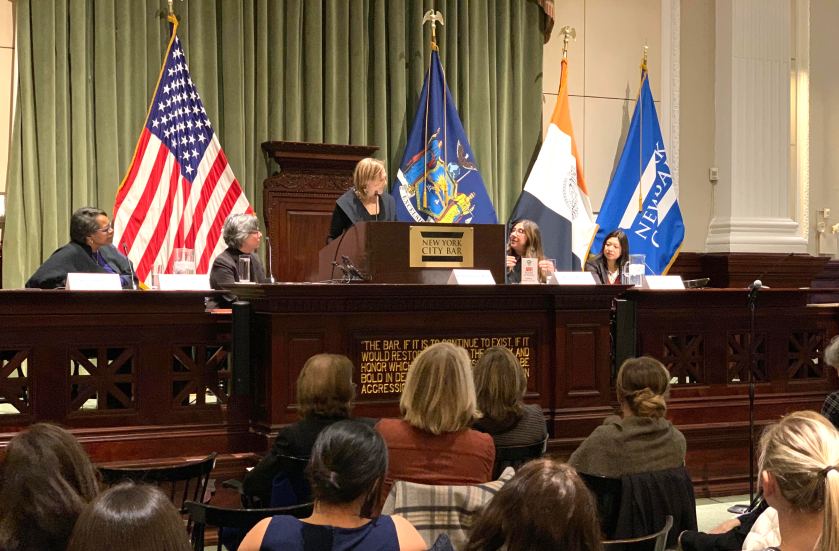
This week I attended “Women GC’s Speak,” a New York City Bar Association panel moderated by Debbie Epstein Henry. Among the four General Counsel panelists, the leadership message was exceedingly clear:

Take on challenges,

find opportunities,

push yourself to be a little uncomfortable,

fill leadership gaps, and

figure it out.


Women GC's Panel image - 11-6-19 - NYC Bar.jpg

Panelists and moderator, from left to right: Ayssa Harvey Dawson, Cari Robinson, Debbie Epstein Henry (moderator), Romy Horn and Sonia Low. Photograph copyright 2019 Anne Marie Segal. All rights reserved.

Here are four specific insights the panelists shared that echo and underscore the coaching work I do with my General Counsel clients:

Romy Horn, General Counsel of the W2O Group, suggested that among the business aspects a law firm attorney (for example) needs to learn to transition into a GC role, there is one key aspect that many would-be General Counsel fail to grasp:

“Finance. [To be a trusted advisor and excel in a GC role], lawyers in companies need to understand the financial aspects of what they are doing.”

Sonia Low, VP, General Counsel and Secretary of the Jacob K. Javits Convention Center, reminded the audience that GCs are valued not for reciting the law but for helping senior leaders and others meet their business goals. To be a problem solver and transcend the legal function, don’t be afraid to ask:

“Can I come with you to these conventions? I’d like to meet more CEOs and CFOs, so I can better understand what drives them.”

Ayssa Harvey Dawson, General Counsel, Head of Legal, Privacy and Data Governance of Sidewalk Labs, shared that too many attorneys are caught in the “qualifications” trap and talk themselves out of opportunities as a result.

“Qualifications are subjective. When my last company was bought, I thought to myself, what do I want to do next? What I have learned from that is to never be afraid to embrace change.”

Cari Robinson, Executive Vice President and General Counsel of Revlon, echoed that advice, adding that you are never going to know everything about a business, especially if you change industries, so:

“You can’t be bashful about asking people to slow down and explain things to you.”

Robinson also shared two essential factors that have helped her succeed as a GC:

first, her global litigation background, which showed her “a little piece of a lot of things” that collectively taught her “how to think about business” and made her a very nimble attorney, ready to face any opportunity, challenge or crisis situationand

second, her evolution from a focus on building her own career to supporting and building out her team.

For more information about this panel and the sponsoring committees, click here.

Anne Marie Segal is a career and leadership coach, writer and resume writer for attorneys, executives and entrepreneurs. In her practice serving lawyers, she coaches General Counsels, law firm partners, counsel and associates, as well as government, academic and non-profit attorneys.


Executive Interview Preparation: The Checklist

If you are a typical executive, it’s a challenge to find time on your calendar to prepare for interviews. When you do carve out that space, here’s a checklist of what you should cover.

Businesswoman working in the office

Due diligence – know as much as you can about the target organization and management beforehand, including what they do, why and who else is in the game

If you are extra short on time and not familiar with the market, management team, products or other other important data points, check if there are videos online that you can watch or hear while going about your other activities. 

Common ground – find out what you have in common with your interviewers and who else you might know (or can get to know) at the company; use LinkedIn® and other resources; reach out to colleagues and their networks where appropriate

Posture / Energy – plan how you can gear up on interview day with a power pose; watch your body language in the room (eat well the night before and that morning!)

Confidence – “I can handle it. Here’s what I’ve done that’s analogous….”

Concise, targeted value proposition – why should they hire you? what do you offer?

For phone interviews, you can have this in front of you, with a page for each of your three to five most important points and examples that support each.

Edge – what’s unique about you that others won’t bring to the role?

Curiosity – ask light, open-ended questions to get better answers

Story / Narrative – who are you as a candidate and a person? why is this organization a fit?

Accomplishments – have accomplishments ready to discuss that fit what you will be asked to do in the role; give examples (without revealing proprietary information)

Behavioral or hypothetical questions – be ready for “what would you do if…?” e.g., if the organization is expanding into new markets or lines of business and they hit a snag (legally, reputation-related or otherwise), if an employee came to you with a certain problem or opportunity, how you would handle a poor judgment call by the Board or another senior leader, etc. 

About you – be ready for “tell me about a time when…” e.g., work style, challenges, successes, etc.; have a short list of versatile examples prepared for these questions

Reason for leaving current role – have a positive way to tell the story; negativity doesn’t sell; give a concise answer and move to why current role excites you

Organizational vision – if you will be leading a company or team, share your vision

Resume – know your experience cold, be open to discuss anything on your resume

Gaps – if you have any that are key to the job, be ready to address them head on

Weaknesses – prepare for the ubiquitous “strengths and weaknesses” type questions

Follow-up – ask intelligent questions to determine if it’s a fit, tailored by interviewer

If you falter, do it gracefully – have a plan to recover from surprises

Interview them back – it’s a conversation, not an interrogation

Compensation – be ready to “talk comp” if they ask; know how you’ll approach this conversation and deflect tough questions

Red flags – save the toughest questions for when you have the offer letter in hand, but note them so you don’t forget

Re-read the job description (if any): prepare for any point that might come up; research terms you don’t know, so you can sound intelligent on what you might be asked

Concise answers – answer the questions asked; avoid tangents; speak to your value

Close well – find out next steps on their end; know yours; if you want the job, make it known

If you need help formulating a personal value proposition, check out my worksheets here.

Congratulations on your interview! Best of luck!

Anne Marie Segal - Web Image (Credit Alejandro Barragan IV)

Anne Marie Segal is an executive coach, resume writer, Forbes Coaches Council member and author of two well-received books on interviewing and career development. She was a corporate attorney for 15 years before launching her coaching practice.

Image above: Adobe Stock.