Interview Prep – Book & Checklist

Most of my readers know that I have been busy “creating things” (and even started learning Italian) during the pandemic, but I have not posted anything new on this blog for quite a while!

Since my last post, some important aspects of my coaching practice have shifted, but in other ways it has stayed the same.

One change, of course, is that I have continued to refine my approach over the last two years. Serving as the Facilitator for the PODER25 program of the Hispanic National Bar Association in 2020-2021 afforded me incredibly rich new insights, and more recently I have also been facilitating cohort programs of my own.

Another happy development is that I have been humbly informed by a growing number of clients that they reached out to me as a coach on the basis of reading one or both of my books. A few have even held it up on the Zoom call to show me their flagged and dog-eared copies. What an amazing thing for an author to hear, and I am incredibly grateful!

Master the Interview, available on Amazon and other bookseller sites worldwide.

Among these and other changes (the pandemic included) since I published my first book – Master the Interview – in 2016, I have decided to release a second edition. If you have anything you want to share with me about the book (and interviewing) in the meantime, feel free to reach out.

The Second Edition will include expanded discussions of:

  • Behavioral interviews
  • Compensation negotiations
  • Diverse viewpoints toward the interview process
  • Interviewing for multinational corporations
  • Interviewing with a board of directors
  • And more!

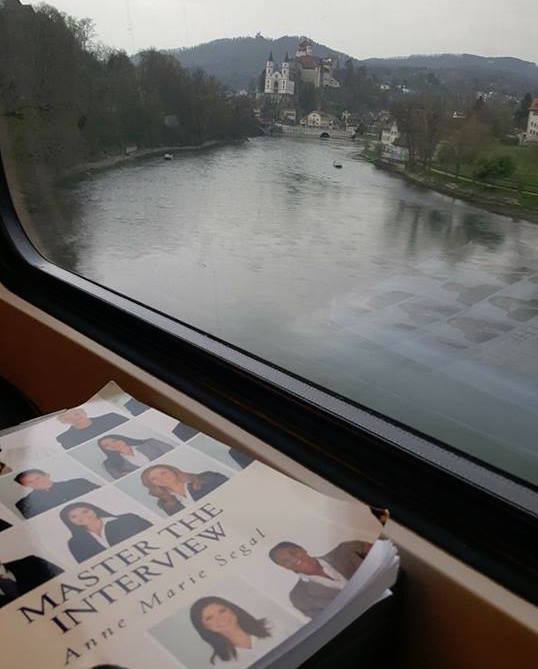
Here’s a lovely image of Master the Interview making its way down the Rhine River in Switzerland, courtesy of a friend and former colleague who read it cover to cover.

In honor of the upcoming Second Edition and my restarting this blog, I am sharing my GC Interview Preparation Checklist (which is also very helpful for other C-Suite and senior roles):

Thanks all!

Across the Private Sector: Strategic Leadership and the Coronavirus Pandemic

As the COVID-19 pandemic has completely altered our work and home life patterns, many of my clients, colleagues and friends have compared this time to having two jobs at once. The term drinking from a firehose, describing the overwhelming flow of urgent matters, has come up more than once in conversation.

While the unprecedented situation has brought heightened pressure and stress, it also provides fertile ground for the disruption of outdated practices and patterns that no longer serve us. Here are some of examples of crisis leadership issues and decisions across a range of companies.

As the COVID-19 pandemic has completely altered our work and home life patterns, many of my clients, colleagues and friends have compared this time to having two jobs at once. In other words, they have their “normal” job – the one they were hired to do – and a new call to lead their teams and/or an entire organization through the coronavirus crisis. Some of them, of course, have a third job as project manager of or substitute teacher for their children’s school schedules or are even serving on the front lines in the medical community or otherwise.

The term drinking from a firehose, describing the overwhelming flow of urgent matters, has come up more than once in conversation.

Covid leadership

While our private sector leaders don’t know what the future will hold – as none of us do – they are nonetheless making strategic decisions to address present needs and prepare for possible future scenarios. Often they need to give answers quickly and with a higher risk tolerance than would have been acceptable in the past, while knowing there could be very real consequences for getting it wrong. At the same time, getting it “right” (either on the spot or by slowing down to observe, process and give thoughtful advice) can make positive contributions to the health, safety, wellbeing, professional development and economic viability of employees within their organizations and create far-reaching ripple effects.

While the unprecedented situation has brought heightened pressure and stress, it also provides fertile ground for the disruption of outdated practices and patterns that no longer serve us. Here are a range of crisis leadership examples emerging in the midst of the coronavirus pandemic:

Team and Organizational Leadership

  1. Creating COVID-19 task forces to streamline and provide consistency in strategy and responses
  2. Helping board members and other senior leaders become more comfortable with virtual platforms for meetings and presentations
  3. Encouraging input across all levels of the organization, especially from those who are closer to the pulse of customer needs
  4. Holding happy hours and other team meetings over videoconference, especially to support those employees who are naturally extroverted and finding it draining to be isolated for an extended period
  5. Hosting enterprise-wide and/or departmental town halls to maintain clear and ongoing communications
  6. Attending to employees’ mental health and personal concerns, such as childcare and family situations (including the possibility that family members are suffering from the virus), while respecting their need for privacy

Business Leadership and Relationship Management

  1. Renegotiating (and seeking out new) contracts and partnerships, such as leases and supply chain agreements
  2. Reinventing how they do business, especially if they are in one of the harder-hit industries
  3. Actively working with regulators to create flexibility to respond to new situations while honoring policy goals
  4. Closely monitoring corporate liquidity while trying to keep their workforce in place
  5. Interpreting ambiguous new laws and executive orders, such as the CARES Act
  6. Continuously updating modeling and/or 100-day plans; resetting or suspending judgment on appropriate goals through the rest of the calendar year
  7. Redeploying underutilized staff to support overtasked areas of the business
  8. Taking business continuity and other lessons from prior crises to apply or adapt to COVID-19 leadership and increase infrastructure resiliency
  9. Adapting leadership responses across the varying needs of local jurisdictions and international businesses and/or business lines
  10. Exploring and creating best practices to allow employees to return to their offices without compromising their safety and providing support for those who can and prefer to continue to work from home
  11. Managing RIFs (reductions in force), hiring freezes and/or prioritization of new hires with limited resources
  12. Arranging donations of extra materials to organizations and individuals

Individual Time/Self Management

  1. Creating personal boundaries and work-home distinctions, even as they may working at off hours and in their living spaces
  2. Branching out into new areas of expertise, while managing the “trial by fire” nature of their expanded responsibilities
  3. Finding ways to stay “fresh” as the crunch marches on

Feel free to add additional examples of crisis leadership you have witnessed in the comments section below. For more COVID-19 career and leadership resources, please click here or visit AnneMarieSegal.com/covid-19.


Anne Marie Segal is an executive coach and writer based in Connecticut. To learn more about her, you can visit her About page or LinkedIn profile.


Yoga Mantra: Let Your Eyes Close (Yes, Really, Even Now)

What do this pandemic and my current mantra of closing your eyes teach us about true freedom, while so many of us are suffering on the front lines or sheltering in place? And how does that relate to what we do in our careers?

As my frequent readers know, I launched a short series this year that ties my yoga practice to my work as a career coach.

Each new post highlights one of the instructions yoga teachers often give their students. These simple phrases can serve as mantras for our daily lives, including our careers.

January – Set an Intention

February – Take a Comfortable Seat

March (this post) – Let Your Eyes Close

When I conceived of the Yoga Mantra series back in December 2019, none of us imagined we would be facing a global pandemic such as COVID-19. 

At the time, I felt as though I was taking a bold step by expanding my highly practical, hands-on coaching approach to add (what could be seen as) a less obvious angle. Would my clients and greater audience – who are mostly attorneys and other highly trained, process-oriented and results-driven professionals – find a discussion of yoga to be at odds with my commitment to focusing on steps they can take right now to get the greatest return on their efforts?

After all, yoga (like meditation, T’ai Chi, reiki and other healing practices and arts) is not intended to bring immediate results. It can, in fact, transform our lives from the very first time we try it. Yet its effects are more often the result of accumulated effort. Or rather, accumulated periods of time in which we release ourselves from effort, trying and striving. Periods of time in which we allow ourselves not to calculate the distance from Point A to Point B but instead to live the journey.

So much has changed in the world since December 2019 (three months ago) or even February 2020 (one month ago). In my case, as an all-too-common example, our local public schools have been closed and converted to distance learning since March 13, 2020. And while the school district has given us estimated dates of reopening (currently April 20, 2020), like other schools cross the U.S. and beyond, they may remain closed until the next academic school year. This is simply one change among countless to our daily lives.

On a global scale, our ability to predict what will happen next – indeed, to live a “predictable life” – has greatly diminished. At the same time, our need for adaptive skills in our careers and general lives has greatly increased:

– facing the unknown,

– rising to the occasion,

– making thoughtful decisions, and

– persevering (ideally thriving) with limited information and constantly changing circumstances.

These needs harken back to the reason I originally launched this series. I have found that too often, people want quick fixes, an “answer” to solve the problem de jour (i.e., urgent matter of the day). Yet changes that actually move the needle in our lives cannot be rushed. A quick flash of insight can create a transformative moment, but the transformation itself (almost invariably) requires a longer period of implementation to take root and create the greatest effect.

Let me give you an example. Say that you move to a bigger apartment so you can have more space. In the first few days or weeks, you might arrive with all of your furniture and boxes, unpack and feel the glory and heightened freedom of your new surroundings. You may feel a new “leash on life” and relish a home environment where so many more things are possible. But if you (quickly or over time) start to fill that space so that it is just as crowded as your old one, the realm of possibility diminishes. You will again feel constricted and constrained.

The same thing happens in the rest of our lives, including in our careers. If you move to a bigger or different role with more space to create impact in or through an organization, but you quickly crowd your days with non-impactful meetings and activities, your new position can feel just as constrained and ineffectual as the old one.

So what do this pandemic and my current mantra of closing your eyes teach us about true freedom, while so many of us are suffering on the front lines or sheltering in place? And how does that relate to what we do on the career front?

First, we cannot control outcomes. We can do our best to create what we seek, but we ultimately can either make our peace with our lack of control or continue to resist (and increase our suffering as a result). Some of us are unemployed or underemployed. Others are “overemployed,” i.e., burdened with the herculean responsibility of strategizing, leading, fixing, triaging, foraging, vetting or otherwise holding the fort during this unprecedented time.

In either case, we can only sit with what is true at this moment. That’s all we have.

Second, turning inward is a healing act. When we close our eyes or soften our gaze, we are not shutting out the world over the longer term. We are restoring our strength so that we can go back out into it. While the world needs more heroes, those heroes need to give themselves permission to recharge. In yoga classes, if you listen closely, you may notice that instructors often suggest you “let your eyes close” rather than “close your eyes.” The first is an act of allowing yourself (to do something), not an act of will.

Allow yourself to turn inward – even if it’s only a few moments of an hour or a few minutes of the day – without worry that you are missing something or failing to complete an urgent task. Changes and tasks will always be waiting for you, and your ability to rise to those changes and tasks will be greatly enhanced if you periodically take time to refresh and center yourself.

Third, our wish not to be vulnerable is illusory. 

I took this self-portrait (eyes closed, feeling vulnerable) in my office a couple of months ago, well before coronavirus dominated our daily lives and our 24/7 news cycle. As I envisioned the post I might write to accompany it, I planned to take some time to explain vulnerability and the macho (toxic) culture of many work environments that seek to stamp out any whiff of weakness.

Yet this week, as senior leaders of across all ranks and ranges of organizations took work-from-home (WFH) videoconference calls with anxious children and barking dogs in the background – and came together over it, rather than judging their colleagues and counterparts for a lack of “discretion” – our collective take on vulnerability has been momentarily suspended. Being vulnerable is a trait we all share, and we can clearly see that through this pandemic. Families are to be protected, not silenced. Lives are to be valued, not treated as something to be fit between more pressing obligations. Vulnerability is something to be recognized as part and parcel of the human condition, as it cannot be avoided.

Anne Marie Segal - eyes closed

Fourth, for a change to last, it must continue to represent our values. Many of us have learned this in other contexts, through other challenges, but what lasting individual and collective change we will carry forward from COVID-19 remains to be seen.

We know that life as usual has been irrevocably altered, but whether those alterations bring us to a better place or simply call for heightened vigilance is a matter of our long-term values. Again, by periodically softening our gaze to the whirlwind of activity, news, adversity and (in some heartbreaking cases) trauma, we can start and continue to ask ourselves where we can find meaning, experience large or small joys of the present moment and build bridges to the direction we are called (both personally and professionally) to follow next.

Be safe. Support those on the front lines. And, from time to time, close your eyes.


Anne Marie Segal is an executive coach and writer based in Connecticut, not far from New York City, and is sheltering at home with her family (dog, cat, husband and two teenagers who are remarkably committed to flattening the curve).

Preparing to Pitch Yourself for Corporate Board Roles: Corporate Board Series, Part 3


Bright meeting room interior with city view

At some point in your career, if you have achieved a certain of success as an executive, you may be considering a corporate board role as a possible and logical next step. Yet the process of creating a “board pitch” can take you out of your comfort zone, as it requires you to view your career through an entirely new lens.

Boards want candidates who are poised to lead an organization and leave the day-to-day administration to someone else (i.e., management). They are focused on high-level, high-impact decision-making, so as you brand yourself and prepare your “why me?” pitch, these are the qualities that should come into greatest focus.

Here are some key points to consider:

Your Audience

The audience for your board pitch should be a carefully selected group of individuals that includes networking contacts, board recruiters, board-marketplace groups and the actual target boards of directors:

(1) Networking Contacts. Your networking contacts often serve as the most fertile ground for your board pitch, as the majority of board roles come from board members’ current networks and word-of-mouth communications. (The percentage of public board roles filled from these sources is nearly 70%, according to a recent survey by the National Association of Corporate Directors.)

If your current network does not include CEOs, sitting board members and others with access to boards, I suggest that – before you consider yourself ready for a board role – you take steps to expand your network in that direction. 

If your current network does include the right mix of networking contacts, you will need to muster up the courage, gravitas and good sense to leverage those connections and create mutual benefit for you and the individuals who will be referring you. In other words, the benefit to you is the chance to make your pitch to the right audience, and the benefit to your networking contact is to have successfully delivered a viable, poised and compelling board candidate.

(2) Board Recruiters. There are a number of recruiters who routinely conduct and complete board searches, and many of them are focused on expanding the talent pool beyond the “usual suspects” of traditional board candidates. (I have posted links to some of the top recruiters here.)

The best corporate board recruiters will have an in-depth understanding of the companies with which they are placing candidates, including corporate strategy, board dynamics and culture fit. Getting in front of these recruiters can often be as difficult as getting in front of the boards themselves, so you may need to rely on your network for introductions here as well.

In any case, take care not to get ahead of yourself. In today’s world, don’t expect many recruiters to have the bandwidth to help you assess whether you are ready for a board role, especially a recruiter you do not know well. Recruiters are hit with too many candidates vying for their time – for board search as well as job search – to be able to provide that level of hands-on, personalized attention to all but a handful of candidates. Instead, prepare yourself as a board-ready candidate with a convincing elevator pitch first, then approach the recruiter, so you do not lose that ephemeral chance to make a solid first impression.

(3) Board-Readiness, Education and Marketplace Groups. There is a range of organizations that can help you prepare yourself for a board role and/or broadcast your candidacy to a wider audience, with differing barriers to entry and effectiveness. In addition, many graduate schools of business offer executive education in corporate governance for board members. Links to some of these organizations and aggregator sites with further links are here. For many of them, you will need to submit an application, which may include some of the documents I list below.

(4) Actual Board Targets. Lastly, don’t forget that the ultimate and most important audience to whom you will be pitching is the specific board itself, namely the Nominating & Governance Committee in most cases and thereafter the wider board. Do your diligence on the board and company so that you can speak directly to their needs for a new board member.

Your “Portfolio” of Board-Ready Communications

While the above constituencies are the audiences to whom you should make your desire to join a corporate board of directors known, there is also the question of how you can best communicate your pitch to join a board. I have mentioned above that before you formally start the process of consistently putting yourself out there for a role, you should make sure you are a board-ready candidate. In addition to gaining the right experience to be a compelling candidate, here are the different and related means of verbal and written communication to have at your disposal:

(1) Board Biography. Your central document as a board candidate is the board bio, which is often a short narrative (one to two pages, sometimes with attachments) that presents you in third person and illuminates the value you bring to the board, including leadership, industry and substantive experience and what can be loosely described as “caché.”  Unlike a traditional U.S. resume, it also may include a small photo in the top right or left hand corner.

The board bio should be clean, inviting, well-written and distilled. If you have current or former board or committee service, including with non-profit entities, this is often listed near the top. Significant honors or awards, certifications and educational qualifications should also be included, with the aim to produce a document that signals you are of the right quality and caliber for a board role without sounding stuck on yourself.

(2) Value Proposition and Elevator Pitch. Building on the exercise of creating a board bio, you can further distill what you offer a board into a short value proposition that can serve as the basis for an email or cover letter regarding your board candidacy as well as an elevator pitch that you can give (and tailor more specifically to) one of your target audiences. 

(3) Board Resume. Sometimes, a board resume is also requested during the board search process, although it is less commonly used than the board bio. The board resume differs from an executive resume principally in its emphasis on those accomplishments and characteristics that would be relevant to board service. 

(4) LinkedIn. Just as you make your network aware of your availability for and interest in a board role through informal conversations and other interactions, you can take another look at your LinkedIn profile to determine whether it conveys your board-ready expertise and gravitas or could use some more help in that regard. 

Copyright 2020 Anne Marie Segal. All rights reserved.


Anne Marie Segal Post Banner

Anne Marie Segal is an executive coach, resume writer and author of two well-received books on interviewing and career development. She served as a corporate attorney for 15 years, including roles at White & Case LLP and a prominent hedge and private equity fund manager, before launching her coaching practice. 

Based in Connecticut not far from New York City, Anne Marie partners with clients internationally on executive presence, impactful communications, graceful transitions and other aspects of professional and personal development. 

To join her mailing list, click here.

Nine Ways to Accelerate Your Career Growth and Job Search as a Chief Legal Officer or General Counsel

Many of my clients are Chief Legal Officers or General Counsel at public or private companies who want to know how to (1) expand the growth runway in their current role and/or (2) find a new role that better suits their growth trajectory. Often these two goals go hand-in-hand, especially if you can initiate further career-enhancing opportunities within your current organization while opportunistically being open to new roles externally. If you are a Chief Legal Officer or General Counsel and at a similar career juncture, here are some insights that may help you accelerate your career growth and/or job search.

Many of my clients are Chief Legal Officers or General Counsel at public or private companies who want to know how to (1) expand the growth runway in their current role and/or (2) find a new role that better suits their growth trajectory. Often these two goals go hand-in-hand, especially if you can initiate further career-enhancing opportunities within your current organization while opportunistically being open to new roles externally.

In other words, often it behooves you to do both: look for internal and external opportunities rather than rigidly treating internal growth and job search as an either/or proposition.

Portrait happy, smiling business man outdoors

If you are a Chief Legal Officer or General Counsel and at a similar career juncture, here are some insights that may help you accelerate your career growth and/or job search:

      1. Get plugged into the right networks. For example, many veteran CLOs and GCs take active steps to seek out potential successors. If you are on their radar screens as a contender, whether you are an internal or external candidate, you will be first in line when the transition occurs. Beyond that, remember that you will not only need to convince the CLO or GC who is currently in the role but also appeal to the CEO and Board of Directors.

      2. Get on the radar screen of recruiters. As an ancillary network-building activity, take the time to get to know the recruiters who are commonly involved with General Counsel searches. Recruiters work for companies, not candidates – a distinction that it serves you well to understand! – and therefore may not be actively pursuing you or overly responsive (although they should not simply ignore you) unless they have a role that fits.

        It’s your job to get in front of recruiters without becoming a pest (respect their time!), continue to be polite and responsive yourself (even if you feel desperate or entirely overwhelmed at any given moment) and make sure that you have done the work to polish and present yourself as a compelling candidate rather than expecting the recruiter to figure out what to do with you.

      3. Dust off your resume, LinkedIn profile and interviewing skills. If you do intend to conduct (or find yourself in) a job search, or you wish to target a key promotion, make sure you have put yourself together as a compelling “package.” (This echoes what I listed in #2 above.)

        At the very least, review your resume to make sure it reflects your current accomplishments and communicates them in a clear manner. Not only does this help you have a “better” resume, but it also gives you a lens to focus on the value you have brought to your organization and what you can expect to contribute in the future. Similarly, if you have not interviewed in over ten years, you should seek to sharpen your executive presence and interviewing skills, whether you are interviewing with your own board of directors (for an internal promotion) or a new one (for an external role).

      4. Know how Chief Legal Officer and General Counsel searches are conducted. If you wish to be viewed as the top candidate, it behooves you to know what your audience is looking for. Admittedly some companies do not have a good handle on their own hiring priorities, even for a role as important as CLO or GC, and you will need to fill in the gaps for them (or avoid taking those roles). Others are cognizant of best practices and conduct a highly organized and effective search.

      5. Know what Boards of Directors, CEOs and other senior management want from their Chief Legal Officers and General Counsel. Whether it is through informational interviewing, informal discussions, mentoring or your own due diligence, make sure that you understand what is expected of a CLO or GC while serving in the role.

      6. Consider adjacent roles. Within your own company or at a new one, consider how you can take on business and other roles that will expand your range of influence and subject matter domain. Examples abound and include running a business line within the organization, serving on the board of a branch or subsidiary, heading up government affairs, leading a high-profile initiative or serving as an interim in another C-Suite role, such as Chief Operating Officer, Chief Human Resources Officer, Chief Sustainability Officer or even Chief Executive Officer. If you need more robust industry or subject matter expertise, emotional intelligence or caché to take on such a role, go out and get it!

      7. Envision yourself as a C-Suite leader, not just a lawyer. Just as you need to do the work to know your value proposition and polish your brand before speaking with a recruiter, you also need to do the work to wrap your head around the business and how you can add value as a member of senior leadership. Invariably my clients who see themselves in this light – rather than “the lawyer in the room” – are the ones who are more successful at attracting sponsors and other upward mobility and achieving marketability in their careers.

      8. Enlarge your circle of possibilities while respecting your own guiding principles. Know what your priorities are and plan your career around that. For example, if you feel that you need to stay in the Chicago or Nashville area for another five years, understand how that affects your career choices and target your decisions on where to build out your expertise to match the market. Ask yourself: how wide of a circle can I draw so that I don’t foreclose opportunities while continuing to meet my own personal commitments and values?

        For example, if you are currently in Nashville but ultimately want to return to Boston, Miami or San Francisco, can you create or strengthen ties to that target city now that will facilitate your transition when the time is appropriate? Alternatively, you may decide that a top role in Wisconsin, Indiana or Michigan is sufficiently close to the Chicago area to honor your commitment to stay local, depending on the reason that you have made this a priority. Even if you are truly open, geographically or otherwise, make sure that the role continues to meet your other priorities.

      9. Build out your reputation beyond your current company. Don’t become so focused on the “problems at hand” that you forget to build out your leadership credibility and network beyond your current organization. Set aside some time (for example, 5% to 10% of your total professional energy) to make this happen, and choose your engagements well so that they are meaningful to you and impactful on the community or other target audience.


Anne Marie Segal
 
is an
executive coach, resume writer and author of two well-received books on interviewing and career development. She served as a corporate attorney for 15 years, including roles at White & Case LLP and a prominent hedge and private equity fund manager, before launching her coaching practice. She is also currently serving as the Conference & Workshop Facilitator for PODER25 General Counsel pipeline initiative of the Hispanic National Bar Association and HNBA Via Fund.

Anne Marie Segal

Based in Connecticut not far from New York City, Anne Marie partners with clients internationally on executive presence, impactful communications, graceful transitions and other aspects of professional and personal development. 

First image above: Adobe Images.

Understanding How Corporate Boards Evaluate Prospective Board Members: Corporate Board Series, Part 2

In my prior article on corporate boards, I explored how you can build out and articulate your vision for board service. This time, I will take the other perspective. What do (and should) corporate boards have in mind when they evaluate prospective board members?

Corporate Board Series, Part 2 - Evaluation Process - AnneMarieSegal.com.jpg

In my prior article on corporate boards, I explored how you can build out and articulate your vision for board service. This time, I will take the other perspective. What do (and should) corporate boards have in mind when they evaluate prospective board members?

The list of board-ready qualities is long, and in almost every case it will include:

  • culture fit
  • expertise
  • thoughtful engagement
  • integrity

A company might have different ways to express the above, and it will often add other important factors to the list, such as international experience. As a concrete example, here is the list of independent board candidate qualifications for Colgate-Palmolive.

Let’s explore each of these four core qualities in more depth:

Culture Fit. Just as a prospective employer is looking for candidates who would be a fit for the culture of the organization, so is the board of directors. At the same time, you need to be a fit for the specific culture of the board itself.

Here is an article by three leaders in board recruitment at SpencerStuart that speaks further to the importance culture fit on boards, including ways to help define this elusive concept. As a prospective board member, you will be well served to learn as much as you can about the board and company culture – including who are the heavy hitters and how they drive the board conversation – so you can both appeal to the board that you are a fit and determine (for yourself) that you actually are.

Many nominating/governance committees are (thankfully) moving away from using “fit” as a proxy for compiling a homogenous board. Diversity continues to be a priority for board refreshment among many of the surveys of board trends.

Expertise. Another key aspect boards use to evaluate candidates is their expertise across the range of areas that the board would need to span. Financial acumen is clearly one area of expertise that is in high demand, but it is not the only one. Leadership expertise is also clearly important, and this couples with an ability to appreciate (and put into practice) the role of the board as providing oversight, not “doing” the work of running the company.

As Betsy Atkins illuminated in her interview with Alexander Lowry on Boardroom Bound (see episode #30), board candidates should think about where they can add the most value in differentiated expertise. For example, she notes that you may have functional skills (like financial, marketing or product expertise),  specific industry knowledge (such as deep domain expertise in steel or financial services) and/or stage-of-company expertise (such as with taking early-stage companies public, turnarounds or large-cap global multinationals).

It also pays to do some research into how your functional role can add to the board composition. For example, if you happen to be a General Counsel (GC) and seeking a board role, as many of my clients are, you will want to be able to articulate what General Counsel can add to boards (even if the company already has a GC, as they likely will). Since often the value a GC brings to the company cannot be easily expressed without an understanding of the big picture – which is harder than saying you brought revenues from $X to $Y – finding another way to get your message out there can help boost your candidacy while adding to your cache (#4 below).

For example, here’s an article in Modern Counsel about Audrey Boone Tillman, EVP and GC of Aflac, that highlights both her work on corporate governance and regulatory compliance and her appreciation of cultural differences in a very readable manner. It would be tough to communicate the same breath, depth and range of compatible skills in a few bullet points or sentences on a resume or board biography.

Articles such as this one demonstrate not only individual skill sets but also what a candidate brings to the table as a “full package.” (Note: I am not commenting on Ms. Tillman or anyone else’s motivation for the article, simply speaking to its effectiveness.) For executives who have access to company-generated or external media coverage that can help tie together the threads of their careers, it is worthwhile to invest the time to create a compelling and cohesive career narrative.

Thoughtful Engagement. Boards consistently state that they want members who will be actively engaged in meetings and are not afraid to ask the tough questions. One way to demonstrate your potential for engagement as a board candidate is to be apprised of the top issues facing boards today. (Note: For public companies, the NACD public company governance survey offers key insights, and many of these translate for private companies as well.) Another is to have and make known a genuine passion for the company itself and its customers. Further, as most board recruitment is through connections, being known as someone who is actively engaged in your current role(s) will position you as an attractive candidate for a board.

Integrity. With the increased scrutiny on boards, it also goes without stating (but should be included for completeness) that boards are placing greater value than ever on a board candidate’s integrity. In most cases, in fact, this is the most important quality a board member can have.

Copyright 2020 Anne Marie Segal. All rights reserved.


Anne Marie Segal Post Banner

Anne Marie Segal is an executive coach, resume writer and author of two well-received books on interviewing and career development. She served as a corporate attorney for 15 years, including roles at White & Case LLP and a prominent hedge and private equity fund manager, before launching her coaching practice. 

Based in Connecticut not far from New York City, Anne Marie partners with clients internationally on executive presence, impactful communications, graceful transitions and other aspects of professional and personal development. 

To join her mailing list, click here.


Yoga Mantra: Take a Comfortable Seat (In Your Career)

Welcome to a new decade and my first article in a monthly series, Off the Mat: Yoga Mantras for the Modern Career.

Through this new series, I am creating a space in which I can support clients and readers who are interested in and receptive to furthering their yogic wisdom by providing a means to translate yoga principles to their careers.

This month’s mantra is fitting for the New Year and often incorporated into yoga classes during the first few days of the year (and other times): set an intention.

Yoga Mantras for the Modern Career

If you have ever been to a yoga class, you know that you are often invited to “take a comfortable seat.” You can sit on the floor or on a yoga block, bolster or zafu meditation cushion, and you are encouraged to choose the position that is most comfortable for you.

Relatively comfortable, that is. Not “cozy all tucked in your bed” comfortable, but the seat that feels most relaxed but allows you to stay alert at the same time.

Many of us, at least in the West, are not as accustomed to sitting without a chair or couch that has a back to rest on. We have do not have our core muscles sufficiently developed to keep our spine straight and pelvis stabilized. As we learn how to engage those muscles, we might be encouraged to imagine the pelvis like a bowl that can be tilted forward or back. Your goal is to find the right angle for proper alignment – keep the pelvic bowl level so you don’t (by analogy) spill the soup!

Yoga teachers, for example, may remind us to extend our spine from our sacrum to the base of our skull and relax our neck so our heads feel like they are simply floating. The image helps you internalize the ease and space you can create for yourself. A key takeaway is that we create much less stress in our bodies if we are in optimum alignment and can relax whatever muscles are not needed to maintain the pose.

That’s what you’ll learn in a yoga class – if you have the right teacher – and you can also learn similar concepts from a physical therapist, chiropractor or other health professional. The point of the comfortable seat in yoga, of course, is to help you free yourself (mind, body and spirit) for the work that you’ll do while seated in the class and be able to take that with you as you move off the mat. 

THE “COMFORTABLE SEAT” OF YOUR CAREER

As I mentioned in my first article in this series, Yoga Mantras for the Modern Career is focused on translating yoga wisdom to our professional lives.

We can take the suggestion to “take a comfortable seat” literally, creating an ergonomic workplace and striving for good posture that allows us to relax and our energy to flow freely up and down our spines. That would be a great extension of the yogic wisdom of the phrase.

Yet the concept of the comfortable seat can also be imagined as moving beyond the literal and into the higher plane of how you align yourself professionally. The idea of relaxing while maintaining alertness – holding both of these goals in your mind simultaneously – is the aspect of the comfortable seat that gives us the richest metaphor applicable to our careers.

If you are getting hung up on the words pelvic bowl and spinal alignment, just imagine a cat. They are the masters of relaxed alertness, as they are able to sink comfortably and entirely into a space – as if they have not an ounce of tension in their bodies – yet be on the ready should their environment change on a moment’s notice. 

IMG_6162

Rather than arriving at a comfortable posture, many of us tilt (our career, if not our pelvis) too far forward or too far back. On the one end, we push too far into the future or in one direction or another, hurried and dissatisfied with ourselves, our choices, responses from others or the progress we have made in our careers. On the other end, we may fail to be sufficiently forward-looking, resting on our laurels or even feeling overwhelmed defeated and therefore falling back in our (again metaphorical) seats. In either case, we are not using our core strength to keep us balanced, centered and at ease.

When we are not setting ourselves up for ease, we need to devote more of our energies to maintaining our current position and have less energy available to access the opportunities that would present themselves if we were in an optimum state. When we are not alert, we can become complacent and miss those opportunities. The wisdom is to find the balance that brings both of these states together. 

How can you achieve the optimum state of relaxed alertness in your career?
What would be different if you did?


Anne Marie Segal 
is an executive coach, resume writer and author of two well-received books on interviewing and career development. She served as a corporate attorney for 15 years, including roles at White & Case LLP and a prominent hedge and private equity fund manager, before launching her coaching practice. In addition to her career coach and resume writer certifications, she is a certified yoga teacher. 

Based in Connecticut not far from New York City, Anne Marie partners with clients internationally on executive presence, impactful communications, graceful transitions and other aspects of professional and personal development. 

This article is not medical advice. It is career advice!

Second image above copyright 2020 Anne Marie Segal. All rights reserved.